India’s conduct on water sharing fails a second international legal test. Irrespective of any treaty, customary international law bars states from causing transboundary harm through the use of their own territory, a duty traced to the Trail Smelter arbitration and applied to shared rivers through the rule of equitable and reasonable utilisation, which requires timely notice of any measure likely to significantly affect a co-riparian state.
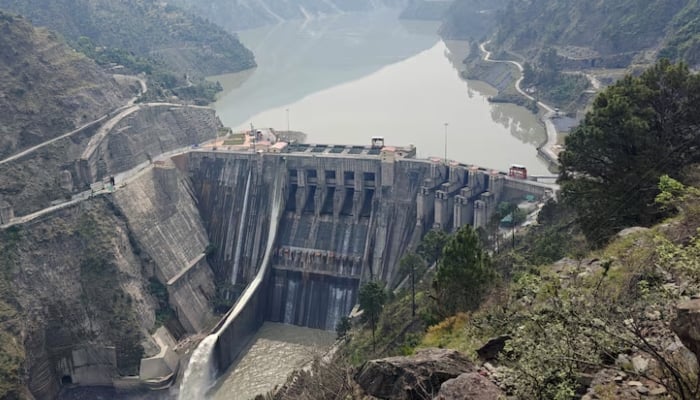
When India released water from dams in Indian Illegally Occupied Jammu and Kashmir into the Jhelum and Chenab in April and May 2025 without warning Pakistan, causing flooding on the Pakistani side, it breached that duty regardless of what label it had attached to the treaty days earlier. The standard justifications for unilateral suspension fare no better.
A state may suspend a treaty only where the other party has materially breached it or where circumstances have fundamentally changed, and Pakistan’s alleged connection to the Pahalgam attack — unproven and unrelated to water-sharing — satisfies neither test. Even the law of countermeasures, invoked by India in defence, requires prior notification and continued use of existing dispute settlement machinery before any unilateral step, and India did neither.
Most recently, India has sought to rewrite the core bargain of the treaty, taking water that was allocated to Pakistan and treating it as India’s to reroute. Public tenders for the controversial Chenab-Beas Link Tunnel shoot a missile straight at its heart. This is a $23.52 billion project designed to move an estimated 1.9 million acre-feet of water annually from the Chenab basin into the Beas.
Pakistan’s legal objection rests on Article III, which recognises no category of surplus western river water available for India to divert into an eastern basin. No declaration of abeyance changes that allocation, however often it is repeated. The treaty remains valid and binding, and no party may unilaterally suspend obligations under an agreement that provides no mechanism for doing so.
Strip away the legal architecture and what is left is this: 240 million people whose bread, cotton, wheat, fields and cities depend on rivers an upstream neighbour has chosen to treat as a political lever. Pakistan draws 95%of its renewable water from the Indus Basin, and agriculture consumes 96%of that supply.
The system irrigates roughly 80% of the country’s arable land and underwrites nearly a quarter of GDP and almost a third of employment. Eleven million Pakistanis faced acute food insecurity in 2025, with 9.3 million in crisis conditions and 1.7 million in emergency conditions.
Per capita water availability, already at 1,100 cubic metres annually, is projected to fall to 900 by 2050, well under the global scarcity threshold of 1,000. Pakistan can currently store only 30 days of water, compared with a global benchmark of 120. India’s planned expansion of upstream storage, from roughly 15 days to nearly 60, would give it an unprecedented ability to engineer scarcity during winter sowing and release concentrated volumes during the monsoon season into Pakistan’s agricultural heartland.
The Chenab alone contributes 23 million acre-feet of water a year, and its entire catchment lies within India. At this scale, knowing what water is coming is not a planning convenience. It is part of how the state continues to function. Without it, millions are at existential risk.
Withholding hydrological data compounds all of this in ways that warrant being stated plainly. Without the flow information India is treaty-bound to provide, Pakistan cannot forecast seasonal availability, plan irrigation cycles, or manage flood risk. In an agrarian economy where one failed Kharif season pushes millions toward food insecurity, an upstream data blackout is not an inconvenience. It is a strategic policy choice with acute humanitarian consequences.
A UN Special Procedures communication sent to India in October 2025 and made public by December put figures to this. It found that the Indus system irrigates roughly 18 million hectares of Pakistani farmland, about 80% of the country’s arable land, and warned that interference through pondage filling, reservoir operation, gate releases or sediment flushing could infringe the rights to water, food, health, employment, environmental protection and sustainable development for the people who depend on it.
The experts went further than most legal commentary has been willing to go, stating that even the threat of interrupting water flows carries direct human rights consequences, regardless of whether India ever follows through on full diversion. They categorically rejected the use of water as a political or economic weapon, described India’s actions outside the treaty’s agreed dispute-resolution mechanisms as unlawful, and urged India to resume implementation of the treaty in good faith without delay. That is not an advocacy framing. It is a UN human rights finding, and it gives Pakistan’s case at the Human Rights Council a foundation that extends beyond the treaty text itself.
The stakes here extend well past South Asia. If a World Bank-brokered treaty can be shelved by one party without consequence, the message to every upper riparian with an unresolved dispute is unmistakable: infrastructure outruns law. There are 153 countries sharing 286 transboundary rivers and 592 aquifer basins. Closer to home, India’s conduct is already deepening the exposure of Nepal and Bangladesh, both downstream of India on rivers of their own. Bangladesh alone has 54 rivers flowing in from India.
This is not simply a hypothetical raised by outside observers.
At an Islamabad seminar on June 30, Victor Gao, president of the Centre for China and Globalisation, made the point directly, arguing that India is not actually the uppermost riparian on this system, since the Indus itself rises in the Himalayan and Tibetan region, and that no state should take against a downstream neighbour an action it would not accept being taken against itself.
Gao recalled having made the same argument publicly the previous year — when Indian Prime Minister Modi first threatened to cut off water to Pakistan — telling Indian television audiences that such a move would amount to a crime against humanity if carried out in peacetime and a war crime if carried out amid conflict. Pressed on whether he was threatening India, he said he was only repeating Confucius: “Do not do unto others what you would not want done unto yourself.”
The tools to respond require political action more than new legal theory. Pakistan should seek provisional measures from the International Court of Justice to suspend the Chenab-Beas tunnel pending full adjudication. It should raise the matter with the UN Special Rapporteur on the Human Right to Safe Drinking Water under General Assembly Resolution 64/292, since diverting water that sustains hundreds of millions of people is a human rights red flag, not a bilateral technicality.
At every forum where India presents itself as a responsible actor in the rules-based order, the G20, the SCO, BRICS and the UN Security Council, where Pakistan currently holds a non-permanent seat, treaty compliance should be raised as a standing condition of engagement and restoration of India’s obligations should be treated as a precondition for any broader normalisation, stated clearly and held to without exception. Pakistan should also press for a new international convention against the weaponisation of shared waterways, so that the precedent set here does not stand unchallenged in future disputes elsewhere.
At home, the same urgency applies. Every acre-foot Pakistan stores or conserves is one India cannot use as leverage. With only 30 days of storage capacity, Diamer-Bhasha and related projects can no longer be treated as negotiable. Shifting from flood irrigation to drip and precision systems could cut agricultural water demand by 30-40%. Rainwater harvesting in each district should begin.
Projects already approved should continue regardless of India’s conduct, because Pakistan’s water security does not depend on how this dispute resolves. None of this, at home or abroad, should be read as accepting that the treaty is finished. It is not. India’s obligations under it remain in force, Pakistan’s rights under it remain intact, and nothing Pakistan does diplomatically, politically or legally should suggest otherwise.
Concluded
The writer is chair of the Senate Climate Standing Committee and former climate minister of Pakistan.
Disclaimer: The viewpoints expressed in this piece are the writer’s own and don’t necessarily reflect Geo.tv’s editorial policy.
Originally published in The News
2026-07-10 10:19:00