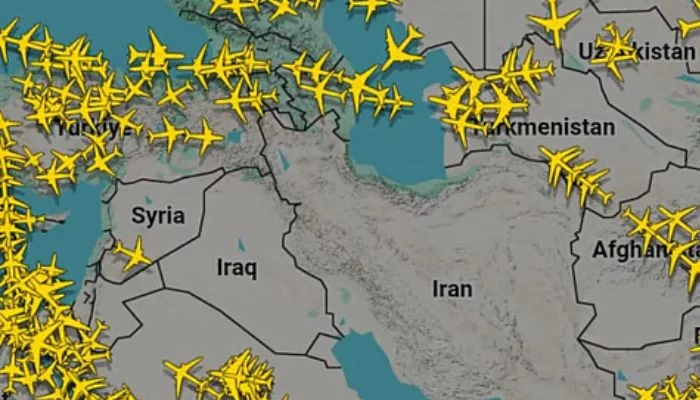
Commercial airlines across the Gulf region are largely maintaining normal operations despite escalating military tensions between the United States and Iran, which led to fresh attacks targeting multiple countries including Bahrain, Jordan, and the UAE.
The latest tension, which is referred to as the worst since a ceasefire agreement in June, has seen three consecutive nights of US strikes on Iran and Iranian retaliation against US-linked targets across the Gulf.
There have been no issues within Dubai International Airport. As per data, 1 per cent of flights were cancelled on Monday, while 12 per cent were delayed.
For now, Gulf carriers are operating at a significant capacity:
- Emirates: 137 destinations across 72 countries
- Etihad: 80 destinations with expanded capacity in future
- Qatar Airways: 160 destinations restored
- Gulf Air: 75% of pre-war capacity
- However, several non-Gulf carriers remain cautious:
- British Airways: Suspended until October 25
- KLM: Cancelled through August 23
- Lufthansa: Paused until October 24
- Air Astana: Suspended UAE flights until July 13-14
UAE airspace is operating normally, as per the General Civil Aviation Authority. Meanwhile, Qatar has reopened its airspace, while Kuwait experiences occasional closings. Iran has partially reopened its eastern transit lanes.
Emirates requests passengers to arrive at the airport three hours in advance, pass through security clearance 90 minutes in advance, and be at the gate one hour prior to boarding. The date change policy is free till October 2026.
Medical insurance has been introduced by both airlines due to the conflict, where Emirates offers an additional 30 days of stay and complimentary hotel accommodation.
2026-07-14 22:41:00