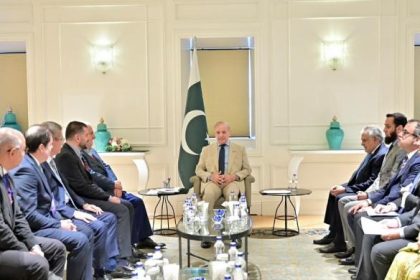

Interior Minister Mohsin Naqvi’s recent ‘system’ remarks have since triggered debates over whether Pakistan needs more provinces, stronger local governments, a different constitutional arrangement or simply better people operating the existing system.
These are important questions. But before selecting a new structure, Pakistan should answer a more fundamental one: What kind of people do we want Pakistanis to become? Do we want citizens who think, question, organise, participate and take responsibility for their communities? Or do we want a population conditioned to wait for decisions from above – grateful for favours, fearful of authority and largely excluded from governing its own affairs?
Countries compete in more than exports, technology, military power and sport. The way they govern themselves is also a competition. Some systems use the intelligence, initiative and experience of millions of people. Others confine consequential decisions to a small circle and expect everyone else to obey. One treats citizens as adults. The other treats them as subjects.
Pakistan’s governing instinct has long been excessively paternal. A limited political, bureaucratic, military and economic elite defines the boundaries of acceptable debate, decides which voices are legitimate and determines how much authority ordinary citizens can safely be trusted with. The public is repeatedly told that it is not ready: not educated enough, not responsible enough, too divided, too emotional or too vulnerable to manipulation.
But people do not learn self-government by being denied it. They learn it by practising it. A society develops political maturity in much the same way that a person develops judgement: by making choices, accepting responsibility, experiencing consequences and correcting mistakes. Local councils, representative institutions, independent associations, open debate and peaceful transfers of power are not rewards granted after a population becomes mature. They are the means through which political maturity is produced.
More provinces may improve administration. Stronger local governments may bring services closer to citizens. Constitutional reforms may distribute authority more effectively. But each of these changes can reproduce the same failures if the underlying philosophy remains untouched – if a few people continue to believe they have the right to decide the country’s direction while the majority are expected merely to comply.
Pakistan could create 20 provinces and still govern them through unelected influence, patronage and centralised control. It could hold elections while restricting the choices presented to voters. It could establish local governments while withholding their authority and finances. It could amend the constitution while preserving the assumption that citizens cannot be trusted with genuine power. Pakistan must therefore decide its destination before debating the precise route. The institutional mechanism may evolve with time, experience and circumstances. Different democracies organise authority differently. Presidential and parliamentary systems, federal and unitary states, large provinces and small municipalities can all take different forms.
The mechanism can evolve. The destination cannot remain ambiguous. That destination should be a society in which citizens are free to choose their representatives, question those who govern them, organise politically, influence public decisions and remove leaders peacefully. State institutions should operate under the law rather than above it. Governments should derive authority from citizens rather than treat public participation as an inconvenience to be managed.
Robust democracies are far from perfect. They suffer from inequality, polarisation, poor leadership and institutional failures. But they broadly accept that citizens are not passive recipients of government. They are participants in it. Pakistan must lock in the same objective.
Once that destination is accepted, institutional proposals become easier to judge. A reform is valuable if it increases citizens’ agency, participation and ability to hold power accountable. It is questionable if it merely creates new offices while preserving control at the top. The harder question, then, is not for ordinary Pakistanis. It is for the country’s establishment and entrenched elites.
Are they prepared to accept a future in which they do not determine every outcome? Can they tolerate governments they dislike, public arguments they cannot control, institutions that refuse instructions and citizens who regard authority as accountable rather than sacred? Are they willing, when required, to take the back seat? Democracy does not require powerful institutions or wealthy families to disappear.
It requires them to accept limits. It asks unelected institutions to remain apolitical and subordinate to civilian supremacy, the bureaucracy to serve rather than rule, business elites to compete without purchasing influence, and political families to earn authority rather than inherit it. This is a difficult surrender for those accustomed to deciding the national interest on everyone else’s behalf. But without it, no administrative arrangement will rescue Pakistan.
New provinces will become new arenas for old power struggles. New institutions will acquire the habits of the old ones. Reform will once again mean rearranging authority without sharing it. Naqvi warned that without fundamental change, Pakistan would still be discussing the same problems ten years from now. He may be right. But Pakistan’s crisis is deeper than administrative scale. It is a crisis of how power imagines the citizen.
Before deciding how many units should govern Pakistan, we must decide whom Pakistan belongs to. If the answer is its people, they cannot continue to be treated as passive subjects waiting for wiser men to lead them. They must be trusted, empowered and allowed to govern – imperfectly at first, but increasingly well through experience.
The system will begin to change only when those at the top accept that the country is not theirs to manage on behalf of everyone else.
The writer is a civil engineer who advises governments and development partners on infrastructure and innovation. He tweets/posts @znafridi and can be reached at: [email protected]
Disclaimer: The viewpoints expressed in this piece are the writer’s own and don’t necessarily reflect Geo.tv’s editorial policy.
Originally published in The News
2026-08-16 08:37:00