
In 2011, Muammar Gaddafi went on state television to call the protesters burning his country “rats and cockroaches fuelled by foreign money.”
He was not entirely wrong. But he was wrong about the sequence. Foreign money had been arriving for years, quietly widening tribal fractures, funding rival commanders, and building the conditions for exactly the moment he was now watching on live television. By the time Nato aircraft appeared overhead, there was no institutional skeleton left to defend. Libya did not fall because of air strikes. It fell because it had already been hollowed out. This is not a story about Libya but about how modern wars are actually fought and why so many governments only realise they are losing one when it is too late to respond.
Modern military theory describes warfare in generations. First-generation warfare was Napoleon’s: massed formations, regimental discipline, victory by overwhelming numbers. Second-generation warfare replaced bodies with firepower; the artillery barrages of World War I killed more men in a morning than entire Napoleonic campaigns.
Third-generation warfare outpaced firepower with speed and cognitive disruption. Germany’s Blitzkrieg in 1940 did not win because German tanks were superior; French tanks were heavier and more numerous. German generals simply moved faster than French commanders could process, creating paralysis before physical destruction. The French lost inside their own decision cycle, not on the battlefield.
Fourth-generation warfare dissolved the battlefield entirely. Insurgents vanished into civilian populations, denied conventional armies any fixed target, and fought for the political will of the opposing population, not its territory. Vietnam, Lebanon, Somalia: each was a defeat for the US because the war had migrated from terrain to legitimacy, and Washington took a decade to notice.
Fifth-generation warfare (5GW) takes this migration to its logical extreme. The Handbook of 5GW defines it as the deliberate manipulation of an observer’s context in order to achieve a desired outcome. Violence is so dispersed – a targeted rumour, a corrupted official, a manufactured atrocity, a funded street movement – that the losing side may never realise it has been conquered.
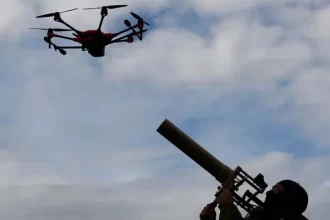
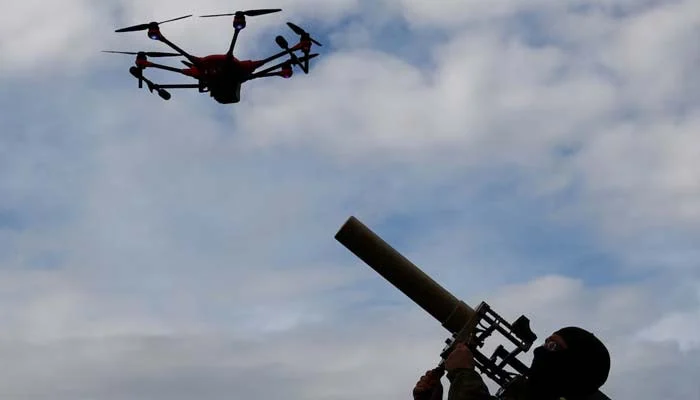
Hybrid warfare is the practical synthesis: conventional military pressure, irregular proxies, cyber operations, economic coercion, and information war deployed simultaneously so that no single domain presents a clear enough threat to trigger a coherent defensive response. Russia demonstrated this in Georgia in 2008. South Ossetian proxies created the pretext, an information campaign recast Moscow as defender, and five days of conventional force detached two provinces before any international mechanism could react. In Ukraine, Russia ran the same playbook across a longer timeline: years of civil society penetration, political financing, and energy leverage before the 2014 movement that toppled Yanukovych. When the hybrid phase failed to deliver the whole country, 2022 reverted to tanks, an admission of failure, not a demonstration of strength.
The social engineering sequence inside these operations follows a logic that any government with unresolved governance failures should find deeply uncomfortable. The first move is mapping, not propaganda. External actors identify a target country’s real faultlines: ethnic fractures, sectarian divisions, religiously indoctrinated critical mass, communities invisible to the state, underdeveloped regions, youth educated enough to have expectations and unemployed enough to have rage. These faultlines do not need to be manufactured. They need only to be found and filed.
The second move is amplification. Money flows through media funding, civil society grants and payments to influencers who may not know they are being instrumentalised. The faultline is turned into grievance. The third move is direction: organic protest energy is guided towards specific political outcomes through resource allocation and tactical training. The fourth move is the trigger, a moment of genuine or manufactured state overreach that collapses residual public trust. By then the government is reacting, not governing. That reversal is the objective.
The upheaval in the Arab world since 2011 is a deadly manifestation of hybrid warfare. A spontaneous protest by a cart vendor in Tunisia triggered a revolution across the Arab world, incited, organised, and controlled through social media. Tunisia itself survived. It had a military with no political ambitions, a trade union federation capable of civilian interlocution and institutions deep enough that when Ben Ali fled, structures remained to constitute a successor order.
However, Syria was not so lucky. Within six months of the first protests, almost half a dozen regional countries were each running separate proxy networks inside Syrian territory. Assad’s army largely remained loyal to the regime, which enabled him to survive a massive proxy onslaught. But prolonged and attrition-heavy civil war hollowed out the Syrian army, ultimately leading to state collapse.
Rebellion by a large part of the military against Gaddafi resulted in his overthrow, civil war and partitioning of the country between various rival factions. Similarly in Yemen, protests against Ali Abdullah Saleh resulted in divisions within the military leading to civil war and disintegration of the country, each part patronised by a different outside power.
In all these cases, existing fault lines were ignored or suppressed by the state for a long time. In Tunisia, Libya, Egypt, Syria, Yemen and Sudan, strongmen had ruled for decades. Autocratic rule had bred corruption, nepotism, inefficiency and tribalism. Social media provided a tool to ignite the spark, and hidden hands then turned that flicker into an inferno.
Pakistan is not insulated from this picture. The country’s fault lines are real, documented and in several cases self-inflicted. Identity politics by subnationalist political leaders, political polarisation persistently fuelled for minor political gains, the absence of local governing systems, rampant corruption on the periphery, a young generation educated enough to know what they were promised and connected enough to know it has not arrived.
What external actors do with such fault lines is not speculative. The BLA’s Majeed Brigade has documented financing networks running through regional capitals with no interest in Pakistan’s stability. The TTP operates Pashto-language social media channels with production values not consistent with amateurs in mountain caves. Information campaigns timed to specific judicial decisions or political flashpoints, distributed across accounts that appear unconnected, have become a routine feature of Pakistan’s information environment.
The states that have been targeted and survived fifth-generation warfare onslaught are marked by strong and reliable security apparatuses. A security apparatus that stayed united and loyal to the state and successfully fought back against subversion. Since subversion plays a critical role in this form of warfare, it is vital for the state to win in the psycho-social domain.
Fifth-generation warfare is primarily fought in social space; therefore, winning people’s trust is essential to defeating hostile efforts. Besides maintaining a direct connection with its people, the state must identify and eliminate sources of disinformation and propaganda that seed chaos in society.
In fifth-generation warfare, legitimacy is not a public affairs function. It is the only armour that works because the enemy must remove it from inside before the attack from outside can begin.
The writer is a public policy expert and leads the Country Partner Institute of the World Economic Forum in Pakistan. He tweets/posts @amirjahangir and can be reached at: [email protected]
Disclaimer: The viewpoints expressed in this piece are the writer’s own and don’t necessarily reflect Geo.tv’s editorial policy.
Originally published in The News
2026-08-17 09:17:00