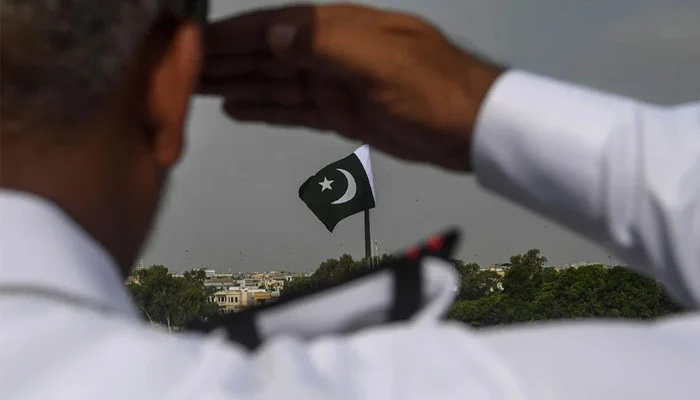
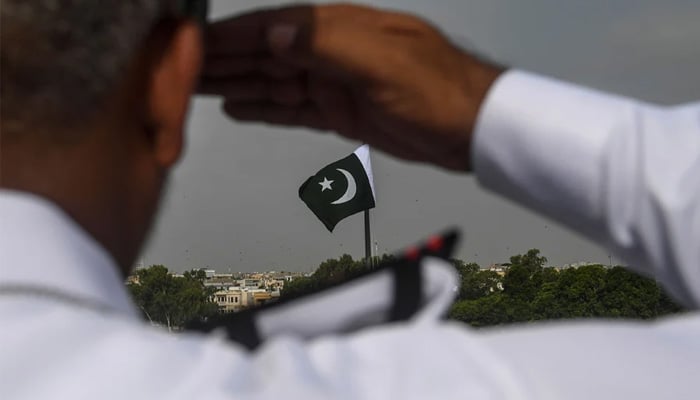
Pakistan today presents a striking paradox. Its relevance abroad is rising just as its political compact at home remains troubled. The world increasingly encounters a Pakistan that cannot simply be ignored or contained within the old categories of a security-dependent South Asian state. It has to be engaged: in diplomacy and security, certainly, but increasingly also in trade, technology, minerals, digital finance and the emerging new economy.
Pakistan sits at the intersection of South Asia, China, Central Asia and West Asia, with the Arabian Sea opening outwards through its ports. Long before the modern state existed, the territory that is Pakistan formed part of the great arteries through which people, commerce, faith and ideas travelled. The Silk Routes passed through this wider space; the Grand Trunk Road connected its cities eastward; Gandharan Buddhist civilisation flourished here; and centuries later Sufi traditions profoundly shaped its social and cultural landscape.
Geography, though, is no longer Pakistan’s only asset. It is the world’s second-largest Muslim-majority country and possesses one of its largest youth populations. Nearly two-thirds of Pakistanis are under 30. Pakistani doctors, scientists, teachers, bankers, engineers, athletes and technology professionals have distinguished themselves at home and abroad. ICT exports have been expanding rapidly: the State Bank recorded $3.8 billion in ICT services exports in FY2025, while the Pakistan Economic Survey reported another 19.7 per cent increase during July-March FY2026.
New areas are opening. Pakistan now has an approved National Artificial Intelligence Policy. It has moved from ambiguity over cryptocurrency towards a statutory regulatory architecture for virtual assets. Mining is also potentially transformative. Reko Diq alone is planned as a multi-decade copper-and-gold project, while the global contest over copper, rare earths and other critical minerals is enhancing the strategic importance of mineral-endowed states.
The opportunity is therefore considerable. But potential is not power. A Pakistani software engineer can compete globally; Pakistan must build the ecosystem that allows thousands to do so. A Pakistani entrepreneur can excel individually; the economy must create conditions in which enterprise becomes normal rather than heroic. Mineral wealth underground means little without investment, technology, infrastructure and credible regulation above ground. Agricultural potential means little without productivity. Investment will not arrive at the required scale where rules appear uncertain or political instability makes tomorrow unpredictable.
Indeed, this gap between individual excellence and collective performance may be one of Pakistan’s most consequential contradictions. Pakistanis compete successfully in some of the world’s most demanding institutions, yet the country struggles to convert its enormous reservoir of talent into comparable national outcomes. The missing multiplier is institutional: systems that reward competence, protect initiative, ensure continuity and allow talent – not connections – to determine opportunity. Without that multiplier, human capital disappears rather than accumulates into national power.
And here lies Pakistan’s central challenge: for much of its history, political power and political legitimacy have not comfortably inhabited the same space. Institutions have competed rather than complemented one another. Even when constitutions have existed, constitutionalism has repeatedly struggled. Political differences that should be processed through an accepted framework have instead too often become existential contests.
The cost goes beyond political instability. It weakens the intangible element without which no durable system, from a household to a state, can function: human trust. People accept authority when they regard its exercise as legitimate, predictable and reasonably fair. The human mind can accommodate disagreement, hardship, and even decisions it dislikes when it believes the process is legitimate. But the same mind resists when rules appear selective, voices are arbitrarily excluded or power substitutes itself for persuasion. Few states and societies have been traumatised by the absence of trust more than our own.
Pakistan has repeatedly encountered the consequences. Alienation has surfaced differently in Balochistan, Khyber Pakhtunkhwa, Azad Jammu and Kashmir and Gilgit-Baltistan; economic constituencies, including farmers and businesses, also have their own grievances. These are not identical problems and must not be artificially conflated. External interference and violent militancy are also real security challenges. But invoking external factors cannot relieve the state of examining why domestic grievances sometimes acquire such force.
The ultimate warning remains 1971. Pakistan’s breakup demonstrated catastrophically what can happen when political conflict ceases to be managed within a framework regarded as legitimate by all major stakeholders.
There is another dimension to this argument which, for a Muslim society, deserves particular reflection. Islamic political thought did not discover consultation in the internet age. Fourteen centuries ago, the Quran identified shura-consultation as a characteristic of collective affairs. If consultation mattered fourteen centuries ago, consider its importance today, when the citizen is exposed instantaneously to competing facts and falsehoods, arguments and propaganda, justice and injustice, wisdom and absurdity. No modern state can permanently control this evolving information and expanding intellectual landscape.
The answer, therefore, cannot be to crush argument or command consent. Instead, it is to create credible processes through which consent and consensus can be arrived at. Where facts are wrong, answer with facts. Where allegations are false, expose them. Where criticism is unfair, counter it. But where grievances are legitimate, acknowledge and address them. A confident state does not fear debate; it creates credible arenas for it.
Pakistan’s current discussion over the creation of new provinces is, in this sense, healthy. Powerful arguments exist on different sides, weighing administrative efficiency, representation, duplication, provincial identity, resource availability and waste and federal balance. They should be argued vigorously. That is precisely how consequential questions ought to be processed.
The same principle must extend to political contestation, economic policy and governance. Pakistan’s constitution does not grant fundamental rights as a favour of the state: Articles 8-28 constitutionally protect them. When constitutional rights operate selectively, the damage is not confined to the citizen denied a right. As we well know, it’s the constitutional order itself that loses moral authority.
This brings us to the indispensable companions of consultation: rule of law and merit. Singapore’s extraordinary rise is often attributed to Lee Kuan Yew’s economic brilliance. Equally important was the institutional message established early: rules had to be credible, corruption confronted, and government capable of applying standards without fear or favour. Singapore’s experience cannot simply be transplanted to Pakistan, but its fundamental lesson is relevant. Investors, citizens and institutions must know where they stand.
Merit performs a similar function. A society in which advancement is seen to depend principally upon access, patronage or affiliation eventually suppresses its own talent and sows seeds of chaos and alienation. When merit is absent, excellence and progress too are.
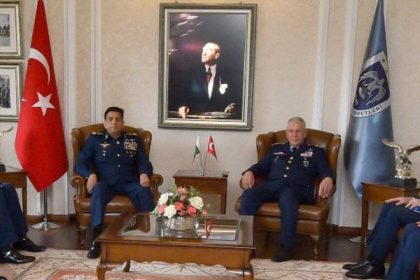
This is ultimately not an argument for less authority. Pakistan faces terrorism, regional instability and serious security threats; an effective state requires authority. It is an argument for stronger legitimate authority. Indeed, Pakistan’s external diplomacy already demonstrates an ability to manoeuvre through competing centres of power. It maintains consequential relationships with China and the US, Saudi Arabia and the Gulf, Turkiye, Iran and the wider Muslim world while retaining its central South Asian role. Decades of mostly outstanding diplomacy, some visionary politics and conventional military experience and counterterrorism operations give it capacities that many countries do not possess.
But external influence ultimately rests upon internal coherence. Pakistan’s next great achievement therefore cannot be merely another diplomatic opening, another mineral discovery, another IT export record or another brilliant Pakistani succeeding somewhere in the world. It must be the construction of a domestic order capable of multiplying all those strengths.
That requires no mysterious formula: law that applies fairly; merit that rewards ability; institutions that respect their constitutional limits; consultation before coercion; facts answered with facts; political disagreement managed rather than criminalised; and citizens treated not as subjects to be controlled, but as stakeholders whose minds, energies and consent constitute the greatest power Pakistan possesses. Without being buried in the mess of our past, which we have all contributed to, we must heal and aim our hearts, minds and energy at a winning future. Machiavellian politics will only augment our current internal mess. Pakistan needs to now build the legitimacy required to convert relevance into lasting national power.
The writer is a foreign policy & international security expert. She tweets/posts @nasimzehra and can be reached at: [email protected]
Disclaimer: The viewpoints expressed in this piece are the writer’s own and don’t necessarily reflect Geo.tv’s editorial policy.
Originally published in The News
2026-09-10 08:59:00