



Indian social activist Sonam Wangchuk may be pushing 60, but he was one of the faces of a “Cockroach” Gen Z movement that managed to oust Prime Minister Narendra Modi’s education minister over exam paper leaks, having fasted for 26 days.
Wangchuk, who is widely believed to have inspired the lead character in a Bollywood blockbuster, is best known for campaigning on issues affecting his Himalayan region of Ladakh.
But his fast, alongside a sit-in by the youth Cockroach Janta Party (CJP), over exam paper leaks that affected millions of students won him a new following among young Indians. That helped turn the issue into a broader Gen Z movement, piling pressure on Modi and leading on Saturday to the resignation of Education Minister Dharmendra Pradhan.
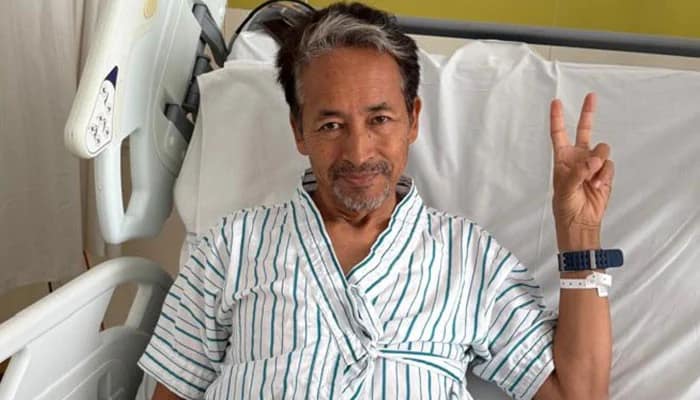
“It’s a victory of democracy, direct democracy… straight from the streets,” Wangchuk said after Pradhan’s resignation, speaking from his hospital bed, having broken his fast only about a day ago.
“It’s a victory of peace, patience & perseverance. Congratulations CJP, Gen Z of the nation and thank you all citizens for shedding fear and the fear of fear and rising up from every corner of the nation.”
Even before police in Delhi moved him to hospital a week ago after his hunger strike, some were comparing Wangchuk to India’s independence hero Mahatma Gandhi. He had received video and text messages of support from across India, including from Bollywood actors.
“I am no Gandhi, no hero,” he said while fasting. “I’m just an ordinary citizen who has not shied away from his responsibilities. Don’t look for a hero in others. Be the hero of your own life and fulfill your responsibilities.”
Lovingly called “Sonam Sir” — Sonam means “merit” or “virtue” in some cultures — by many, including CJP founder Abhijeet Dipke, Wangchuk is one of Ladakh’s most prominent public figures, having built a career around education reform and water-conservation projects in the high-altitude desert. In 2018, he was awarded the Ramon Magsaysay Award, widely known as Asia’s Nobel Prize, for those efforts.
Born in 1966 in the small, remote village of Ulaytokpo in Ladakh, he was a 19-year-old engineering student at the government-run National Institute of Technology in Indian Illegally Occupied Jammu and Kashmir (IIOJK) when he ran a coaching programme in basic subjects such as English and mathematics that helped hundreds of students. He later set up the Students’ Educational and Cultural Movement of Ladakh.
Prepared to die for his causes
As climate change affected water supplies, Wangchuk built artificial glaciers in the form of “ice stupas”, conically shaped ice mountains that store water in winter and melt in summer to supply irrigation water, his Magsaysay citation says.
In recent years, he has become a leading advocate for environmental protection and greater autonomy for Ladakh, a federally controlled territory. He was jailed for nearly six months in 2025 after deadly protests demanding statehood for the region. Wangchuk denied instigating the violence.
Indian media reported that his father, Sonam Wangyal, was a minister in the former state of IIOJK and that former prime minister Indira Gandhi helped break one of his hunger strikes over demands for affirmative action for Ladakh residents.
Wangchuk is married to Gitanjali J. Angmo, who also works in education, and has previously said he was prepared to die for his causes.
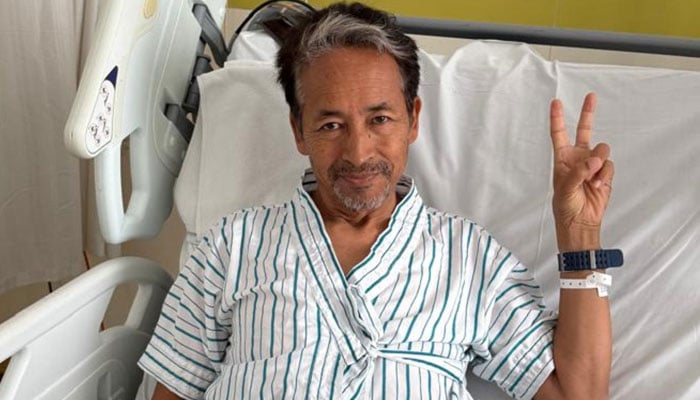
“From accountability, now to reforms,” Wangchuk said on Saturday, flashing a victory sign from his hospital bed, dressed in a striped gown, an ID band on his wrist.
2026-07-25 16:35:00