
Somewhere beneath Islamabad’s F-sectors, a needle that stood at 22.8 metres in 2008 now reads close to 5G. It moves quietly. No flag is raised for it, no anthem sung. But as Pakistan marks its 79th Independence Day this Friday, that falling needle may say more about our sovereignty than anything on a podium will.
This has been a striking year to ask what independence really means. Islamabad enters August 14 with some good news: S&P has just upgraded Pakistan’s credit rating to ‘B’, with a stable outlook. Remittances hit a record this fiscal year. The prime minister is talking up agriculture as the path to recovery. These are real, hard-earned signs that the state is steadying its finances. But sovereignty was never only a balance-sheet question. It is also about whether a country can govern the ground under its own capital and whether the rivers it depends on remain, in practice, its own. On both fronts, this has been a year that calls for quiet reflection as much as celebration.
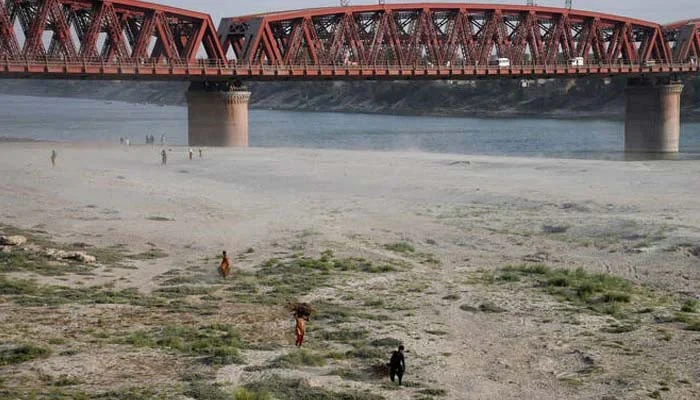
Start with the rivers, because this story is bigger than Islamabad. The Indus Waters Treaty was a hard-fought settlement brokered by the World Bank, after nearly a decade of dispute over rivers that partition had split without regard for how water actually flows. The treaty gave Pakistan the western rivers: Indus, Jhelum, Chenab. It survived three wars. It has not survived last year’s crisis intact. India placed it in abeyance a day after the Pahalgam attack, and has not moved since. As recently as July, India said the suspension continues until Pakistan meets conditions that India alone sets. In May, the Court of Arbitration in The Hague ruled in Pakistan’s favour, limiting how much water India can hold back in its reservoirs on the western rivers. India rejected the ruling and carried on as before.
Sit with that for a second, because it isn’t really a story about water. It’s a demonstration that a country can win a case in the world’s legal system and still not receive the water. International law, without the power to enforce it, can end up offering consolation more easily than remedy.
This matters in very concrete terms. About 80% of Pakistan’s farmland depends on the Indus system, and much of the national grid still relies on the hydropower it produces. Pakistan has already reported unexplained changes in flow on the Chenab: twice in 2025, and again in May this year. The public conversation around this has understandably leaned on strong language – warnings about “water and blood”, talk of “red lines” – because the stakes are genuinely high and public concern is justified. Alongside that, there is an opportunity to build out the quieter, longer-term tools that make a treaty enforceable over time: steady engagement with the World Bank as guarantor, careful documentation of every flow anomaly and continued investment in domestic water storage. Strengthening these tools alongside diplomatic pressure is what will make the treaty’s protections mean more in practice.
There is also a domestic dimension worth sitting with honestly. Pakistan’s case for water accountability abroad will only grow stronger as the country continues to build out its own water governance at home. Islamabad gets its surface water from the Simly and Khanpur dams, but the city’s growth has pushed groundwater extraction close to, and at times past, what nature can replace. This isn’t the kind of resource that simply refills when the rains come back. Once an aquifer is compressed under the weight of the rock above it, it can lose its storage capacity for good, which is why the current moment is a genuine opportunity for stronger coordination between the capital’s development authorities and its residents.
The national picture behind this local one is just as significant. At Independence, Pakistan had close to 5,000 cubic metres of water per person each year. Today it’s around 1,000 – the line economists use to define outright water scarcity. Only about a third of the population has reliable access to safe drinking water. The impact of this scarcity is also felt unevenly across income levels, with some households able to invest in private wells while others rely more heavily on public supply- a gap that thoughtful urban planning could help narrow over time.
Four steps deserve priority. First, the Capital Development Authority needs binding groundwater regulation, including licensing, metering and extraction limits for boreholes, modelled on the recharge-well programmes Punjab has already piloted in Lahore, rather than the weak enforcement Islamabad currently has. Second, rainwater harvesting and groundwater-recharge infrastructure should be mandatory for new housing developments in Islamabad and Rawalpindi, not a voluntary add-on. Third, the National Water Policy’s targets need dedicated funding and a mechanism for public reporting, so commitments do not die at the announcement stage. Fourth, and most urgently, Pakistan needs a standing water-diplomacy cell within the Foreign Office – technical, not merely rhetorical – tasked with documenting water-related disputes, coordinating with International partners and World Bank, and building a sustained diplomatic case that outlasts any single news cycle.
None of this is especially glamorous. Nobody will write a patriotic song about tube-well licensing. But sovereignty has always been built from unglamorous things before it was ever expressed in anthems: land records, census counts, courts that work, treaties that hold.
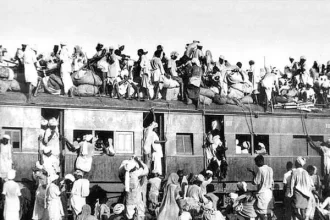
In 1947, Pakistan won the right to draw its own borders. In 2026, the ongoing task is to keep strengthening how it governs what lies inside them – a task that will be carried forward less by what’s said from podiums this Friday than by the steady, patient work that continues long after. One day, that work should be reflected in where the groundwater needle beneath Islamabad’s F-sectors stands.
The writer is a policy analyst and researcher with a Master’s in public policy from King’s College London.
Disclaimer: The viewpoints expressed in this piece are the writer’s own and don’t necessarily reflect Geo.tv’s editorial policy.
Originally published in The News
2026-08-13 09:18:00