
It has become the fashion, when this country is discussed, to hold the funeral first and check the pulse afterwards. Lamentation passes for analysis; the longest face is presumed the best-read. The faults are real — but a lament is not an audit, and before pronouncing a verdict on any enterprise, fairness requires that someone read the original prospectus. On what argument, exactly, was the idea of this country floated?
The debate of 1940–47
Return to the debate of 1940–47, and to a man who deserves better than his admirers have given him. Abul Kalam Azad was not a sentimentalist. His opposition to Partition was an argument — specific, verifiable claims about the Muslim future. He said Muslims in aggregate could bargain within a united polity and would be fatally weakened in fragments; that the millions left behind would be hostages; that rights secured by a constitution would outlast rights secured by a border; and — with the confidence of a man who had spent his life among Congressmen — that the majority could be trusted: not to be generous, but to be rational.
He was not alone. Hussain Ahmad Madani had made the theological case in 1938: nations are constituted by territory, not creed; Hindus and Muslims were two currents of one Indian river; nothing in the Sharia forbade Muslims from living where their faith was free. From a third corner Maududi rejected the whole frame — nationalism itself, composite or separate, was the disease; the League’s Pakistan would be a national state of Muslims, not an Islamic order — and he declined the merchandise on inspection. Three positions, all held by serious men, all sincerely.
They lost. But losing an argument in 1947 is not the same as being wrong about 1947, and it has become customary here to treat the two as identical — just as the opposite camp books every Pakistani failure since as posthumous income for Azad. Both customs are flawed bookkeeping. Let us do these men the courtesy their memory is owed: take the case seriously, and run it properly.
History’s control group
The method is simple, if unusual. Not “was Partition justified?” — a question that invites eloquence and settles nothing — but: what would have to be true, today, for Azad to have been right? Each of his claims implies a testable proposition about 2026. If they hold, the mourning is earned. If they collapse, we may set that grief down and attend to griefs we can actually do something about.
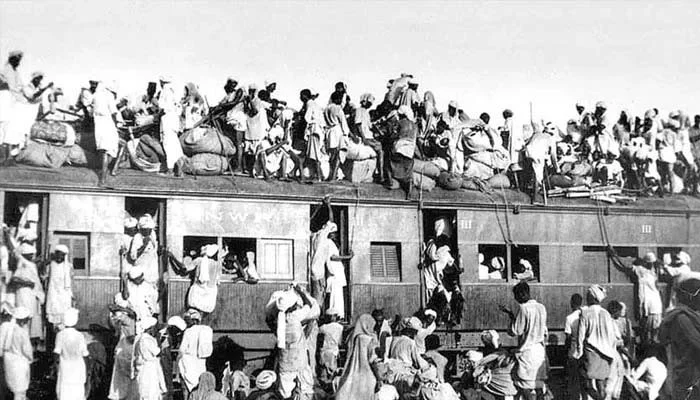
Counterfactuals usually fail for want of records: the road not taken keeps none. History rarely runs a controlled experiment; in 1947 it did, and filed the results next door. The Muslims of western Uttar Pradesh were, until that August, politically indistinguishable from the people who became Pakistanis — same faith, same heroes, same poets, same quarrels. Indeed the League’s demand drew its loudest support from the very provinces the proposed Pakistan would never include — those men were campaigning for a principle, not a postcode. Then a line was drawn; one population crossed, and the other stayed. The control group is alive, seventy-nine years on — and the data on it has been collected, with an irony history must have savoured, chiefly by the Indian state itself.
Begin with Azad’s central contention, which was arithmetical. Undivided, Muslims would have been nearly a third of India — too large a bloc to ignore, large enough to hold the balance in any coalition. Partition, on this reading, was not merely unnecessary; it was the one act that could make Muslim powerlessness permanent, by shrinking the community below the threshold at which it could negotiate.
The proposition can be tested directly, because the experiment was run — in the districts that never left.
The fifteen districts
Take the fifteen Muslim-majority and near-majority districts of western Uttar Pradesh and Rohilkhand — Rampur, Moradabad, Sambhal, Bijnor, Saharanpur, Shamli, Muzaffarnagar and Amroha, where the Muslim share runs above 40%, and Bareilly, Meerut, Hapur, Baghpat, Ghaziabad, Pilibhit and Budaun, where it runs above a fifth. On the 2011 census, roughly twenty million Muslims live there against some thirty million Hindus — 40% of the population, concentrated, prosperous, politically awake for a century. This is Sir Syed’s country, the seedbed of Aligarh, the soil in which the League’s argument was first sown and first believed; had only the Muslims of these districts made a country, it would have been the size of Sri Lanka. If numbers convert into power anywhere in India, they convert here. This is the maximal case, argued on home ground.
They do not convert here. Of the belt’s roughly fifteen Lok Sabha seats, four returned Muslims in 2024. 40% of the people; a quarter of the voice. Widen the lens and the light dims further: 19% of Uttar Pradesh is Muslim, and thirty-four of its four hundred and three legislators are — not one on the government benches, because the ruling party has not fielded a single Muslim candidate in either election it won. Not one, in a state of forty million Muslims, twice running. Nationally the arithmetic holds: twenty-four Muslims in a house of five hundred and forty-three — one seat in twenty-three for one citizen in seven.
Here is the puzzle with which this audit opens: 40% of a population buys a quarter of the representation and no chair at any table that matters. Weight has not converted into leverage; it has converted into liability. And the failure is no accident of one election or one party — it is built into majoritarian machinery itself. Tocqueville and Mill christened the danger long ago: the tyranny of the majority.
The median voter
The logic deserves plain statement, because it is plain. In any electoral system, parties chase the voter in the middle — the median voter — for that is where elections are won. Usually a comfort: competition drags everyone toward moderation. But the comfort assumes voters strung along a line of opinion, so that the man in the middle is a man of the middle. Divide the electorate instead by an identity nobody can change, and the assumption dies. The median voter of western Uttar Pradesh is not a moderate. He is, by simple headcount, a Hindu — and no manifesto can amend him. A party built to please him has built nothing a Muslim can bid for or against. The machinery that softens the politics of rich and poor hardens the politics of them and us.
A machinery that counts heads without weighing them has more tricks yet — and the constitution’s celebrated guarantees fared no better against it.
The ballot as census
But the machinery has a second gear, crueller than the first.
Once the ballot becomes a census, competition runs in reverse. Parties courting the majority cannot outflank each other by wooing the minority — those votes are not on the market — so they outbid each other in distance from it, each proving its devotion by how far it stands from the mosque. Donald Horowitz documented this “outbidding” from Sri Lanka to Nigeria; Uttar Pradesh performs it as live theatre, one “secular” party after another quietly shelving its Muslim candidates and rediscovering, at each election, an old and urgent affection for temples.
All of which exposes a distinction our commentary routinely blurs: elections and representation are not the same commodity, however alike the packaging. An election punishes governments through the voters who can change them. A community with no winning coalition may vote freely, forever, and change nothing — enfranchised de jure, invisible de facto. Political science has names for the condition — majoritarian, illiberal democracy — and a shelf of remedies: power-sharing, minority vetoes, proportionality. But each requires the majority to tie its own hands, and a revivalist majority has no reason to reach for the rope. The Cabinet Mission Plan of 1946 — grouped provinces, a weak centre, entrenched parity — was exactly such a scheme, power-sharing before the term was coined. The moment it collapsed, Partition ceased to be the radical option and became the residual one: not the door the League preferred, but the only one left unlocked.
Azad assumed, in short, that the majority would need to bargain. It does not need to bargain. A coalition that wins without minority votes has no reason to pay for them — and every reason to make the minority’s exclusion its adhesive, for nothing unites a quarrelsome majority like an adversary conveniently resident next door. Concentration, which Azad read as strength, turns out to be what makes a minority most visible as a target and least valuable as a partner. The forty-per-cent Muslim of Moradabad is not the median voter and can never become him. He is the campaign material.
Would a third of India have fared better than a seventh? A larger permanent minority does not move the median voter — he remains, by construction, on the other side — it only raises the returns to outbidding. The revivalist movements that now govern India were born precisely where the Muslim share was largest and the fear of it most electorally useful. Azad’s arithmetic would not have purchased safety. It would have financed the other side’s mobilisation.
So much for numbers. Azad’s second claim was subtler and, prima facie, stronger: that rights written into a secular constitution shelter a minority better than a border can, because text outlasts armies and courts outlast governments. India’s constitution is among the most generous instruments of its kind ever drafted; the proposition can be tested in its Sunday best.
The Sachar confession
In 2005, Prime Minister Manmohan Singh appointed a committee under Justice Rajinder Sachar to establish, officially and for the first time since independence, how India’s Muslims were actually faring. What came back in 2006 was four hundred pages of the rarest document a state ever produces: a confession, signed in its own hand. Almost nobody in Pakistan has read it. It should be on the curriculum.
The findings, briefly. Muslims held 6.4% of government employment against roughly 14% of the population; fewer than 8% held regular salaried work, against a national average of twenty-one. Their children less schooled, their villages less banked, their neighbourhoods less built. And on measure after measure — this is the finding that matters — they had fallen below the Scheduled Castes: below the very community whose exclusion the constitution had been expressly engineered to repair, with reservations, commissions, and seventy years of state attention.
That comparison is the whole argument in miniature. It is not that Muslims did badly; it is that they did worse than the people the guarantees were built for. A guarantee is a promise enforced by the very majority it is made against; it protects whom the majority elects to protect. The Dalit’s claim could be lodged inside the majority’s own story about itself — a Hindu society repairing an internal wound. The Muslim’s claim could not, because the Muslim is not inside the story. He is the character the story is told against.
Would time heal it?
Were Sachar’s findings a temporary phenomenon? Would time heal? A review by the Kundu Committee in 2014 found that eight years had moved nothing worth naming. And in 2024, Asher, Novosad and Rafkin published in the American Economic Journal a study of intergenerational mobility that closes the file: mobility among Dalits is rising; mobility among Muslims is falling. Muslims are now the only large community in India whose sons face longer odds of passing their fathers than the generation before them did. Every other disadvantaged group is climbing, however slowly. One is sliding. That is not a condition. That is a trajectory of fate that escaped Azad’s brilliance.
Numbers, guarantees, time: three failures. One defence of Azad’s case remains — the cleverest, kept in reserve by his ablest heirs.
Audi alteram partem: the caste defence
The last defence of the united-India case is caste, and it deserves its full hearing: audi alteram partem.
It runs: Muslim deprivation in India is not religious at all. The bulk of Indian Muslims descend from lower-caste converts and carry into the present the compound interest on their pre-conversion poverty, exactly as low-caste Hindus do. India is not persecuting Muslims; India is failing its poor. Strip out caste, and the religious penalty vanishes.
It is a serious hypothesis with a clean test, because Muslim India is itself stratified. There exists an ashraf — a self-identified upper stratum claiming foreign descent: landholding, urban, lettered, the class that furnished the League its leadership. If caste explains everything, the ashraf Muslim should sit where the upper-caste Hindu sits — same inherited station, same present fortunes. Ceteris paribus, religion should show nothing.
The religious premium
It shows 52%. On the consumption data in the 2021-22 official surveys, the elite Muslim household spends at roughly the level of the Dalit household — the floor of the ladder — while the upper-caste Hindu household spends 52% more than either. Caste sits with equal weight in both pans, and the scale still will not balance. Caste was supposed to explain everything; it explains everything except the 52%.
Consider what the number means in the flesh. The best-placed Muslim in India — heir to the class that built Aligarh, filled the professions, governed provinces — today lives at the level of the community Hindu society itself assigned to the bottom of its own order. The apex of one pyramid has been pressed down to the base of the other’s.
The verdict on Azad
Three propositions; three failures; every entry certified in India’s own hand. Azad was neither fool nor traitor — a man of vast learning who made a forecasting error, and the error instructs: he overestimated what text can do against a mobilised majority, and underestimated how completely a majority can learn to win without you — then to win by means of you, converting your existence into its glue. Madani’s territorial nationhood was a fine theory of how states justify themselves, and none of how majorities behave inside them. And Maududi received the most eloquent rebuttal in the file, delivered not by any discussant but by his own feet: the man who had pronounced the demand un-Islamic migrated, when the hour came, to the Pakistan he had opposed, and conducted the rest of his politics under its protection.
So the ledger records a profit on the founding transaction, and it is no small profit. A Pakistani Muslim may become prime minister, army chief, chief justice, governor of the State Bank; every office of his state lies open to him. His politics may be noisy, his institutions quarrelsome, his newspapers merciless — but no door in his own country is closed to him on account of what he is. That, and nothing grander, was the League’s ask: jobs, representation, bread, dignity — drafted in worldly terms, auditable in worldly terms. Run on the League’s own yardsticks against a control group its own heartland supplied, the audit returns a verdict in the League’s favour. Quod erat demonstrandum.
Those of us on this side of the line inherit two debts: gratitude for a deliverance we did nothing to earn; and an unpayable obligation to the people of Sir Syed’s country, who campaigned hardest for a state they knew they would never inhabit, and who have spent seventy-nine years settling the bill for our escape.
What the prize is worth
A verdict on the founding is not yet a verdict on the founded. Begin with what the prize is worth when lost. The heirs of Cordoba and Granada, once the most refined Muslim civilisation on earth, are gone — not diminished: gone, struck from the peninsula they had inhabited for seven hundred years. Their monument is a wall that tourists photograph, and a people no one can. The Rohingya of Arakan were citizens of Burma within living memory; one legislative stroke unmade their citizenship, and the world watched them pushed out. Statelessness is not statehood at a discount; it is a different category of existence.
Nor is the existential threat hypothetical. The ideological tradition governing New Delhi since 2014 — Savarkar’s, Golwalkar’s — never conceded this state’s right to exist; its cartography runs from the Oxus to the Salween, the declared inheritance of the ruling party of a country seven times our size and worse still, one at our doorstep. Against that neighbour, a quarter of the subcontinent carved out a state in 1947 and has held it for seventy-nine years — through four wars, a dismemberment, repeated constitutional crises, and a decade as the battlefield of someone else’s conflict.
May 2025
The most recent audit of that capacity came in May 2025, and it deserves entry on the credit side in permanent ink. In a four-day war fought under a nuclear shadow, the opening night produced what observers called the largest aerial engagement in decades — by press accounts, more than a hundred aircraft aloft — and a smaller air force, fighting a much larger one, demonstrated such deftness that it will be studied in staff colleges for a generation: electronic warfare, ground radar, airborne platforms and missiles fused into one multi-domain operation. The adversary’s own commanders conceded losses and a revision of tactics; for the better part of a day, its air activity all but ceased. When the guns fell silent, the diplomatic field widened rather than narrowed for Pakistan — the signature of a state that kept its balance under the severest pressure a state can face. A country that can do that is not a country in decline.
Ibn Khaldun would have recognised the mechanism: asabiyya, the collective ardour that fuses scattered individuals into a polity, won this state and garrisons it still — though he would repeat his warning that ardour conquers and comfort quietly collects the rent. And with that warning the audit turns, for the counterfactual method does not stop when results flatter. The honest comparator now is not the captive Muslim of Moradabad but a free Muslim nation, populous, initially poor, stripped of every excuse we permit ourselves — and for its first twenty-four years, it was ourselves.
The Bangladesh mirror
Bangladesh qualifies on every count: same religion, same inheritance, same monsoon, same crowding; poverty worse than ours — written off in 1971, in a phrase that should never be forgiven, as a basket case. Every alibi in our repertoire — the faith is incompatible with growth, the extraction ran too deep, the geography is cursed — dies on contact with Bangladesh, which held every liability and built, from a single industry and the discipline to run it, an export machine that ships more in a year than we do — a country a fifth our size, without an acre of cotton. The basket case, fifty years on, out-sells the house that named it.
The Bangladesh counterfactual convicts us on our export performance; but the record wants precision, not sackcloth — and the sentence, it turns out, is still ours to write.
The peer test
Passing power repeatedly between genuine adversaries is rare among the large Muslim states: Indonesia has managed it since 1998; Nigeria, raggedly, since 1999; Egypt’s single transfer was reversed within a year; Bangladesh’s journey is full of reversals of its own. Pakistan’s record is imperfect — constitutional rule has been interrupted more than once — but the frame beneath is obstinately durable: four transfers between rival parties since 2008, and the settlement of 1973, the only document every party in our history has jointly signed — suspended at times, rewritten at times, never extinguished, the country returning to it like a joint family to an old house. A dozen quarrelling parties, an independent bar, a press that will not be quiet: we do not value the din, never having spent a day in the silence — and one glance at a neighbourhood where forming a party is a crime, candidates pass a clerical sieve, and the schoolhouse door is barred to girls, cures that deafness.
Even the federation survives an honest look. Our poorest province stands at 63% of our richest — a real gap, a culpable one, but the gap of one country. India’s Bihar stands at 18% of Karnataka: Somalia folded inside the so-called shining India; distance between federating units so wide that it is hardly one country.
The economic history, too, has been narrated not so honestly. For thirty-five of the forty-eight years between 1960 and 2008, Pakistani income per head exceeded India’s; the lead changed hands only in 2009 — the decade we became the battlefield of a war we did not choose, at a whopping cost of thirty thousand lives and a hundred and fifty billion dollars. And 1971 must not be smuggled past the auditors: nemo iudex in causa sua — we sat as judges in our brothers’ case and turned party to it. But read the entry accurately: Bengal revolted not against Muslim-majority statehood but against 1947’s most difficult clause — two wings, a thousand miles apart, one capital. It chose to become a second Muslim-majority state, not a province of anyone’s Akhand Bharat. The founding argument was not refuted in 1971; it was reorganised — and the Oxus-to-Salween dreamers now find two walls across their dream road.
Twelve rupees in a hundred
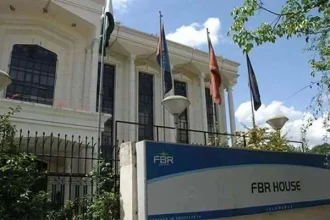
One entry remains, and it outweighs the rest of the debit column. 12% — what this state collects of what its economy produces, and it has collected below that level for a generation: a settled bargain every administration inherited and left undisturbed. A recent surge of 1.5 percentage points is an aberration, not a norm. A state that cannot take twelve rupees from a hundred cannot school its children, police its cities, defend its currency, or sidestep its standing commitment to the world’s lenders. Nor are the arrears the federation’s alone: the provinces, assigned some of the richest untapped bases — agricultural income, urban property, services — collect barely 1% of GDP between all four. A landlord’s harvest and a city plot, the two oldest forms of wealth in this society, remain the two least taxed: the federation borrows abroad what the country declines to collect at home.
From that refusal the rest follows. Exports have stood near thirty billion dollars for a decade while Bangladesh’s tripled and Vietnam’s passed three hundred billion — no act of God, but the yield of an industrial policy that issued protections that never expire, priced concessions by fiat, and verified rents by the recipient’s own signature: a system rewarding the talent for obtaining a subsidy over the talent for selling a product. The New Tariff Policy is a welcome departure from policy capture, but too recent to bear fruit yet. The schools enrol but do not teach — half our ten-year-olds cannot read a sentence written for their age. The female half of the nation stands largely outside the workforce: the prosperity game played with one hand tied behind our back, and we tied the knot ourselves. And beneath everything, the quietest number and the loudest: four in ten of our children are stunted — bodies and minds discounted by hunger before their fifth birthday, a write-down no reform can reverse. These are not history’s wounds. History set no tax rate, exempted no harvest, sent no child to bed unfed. These are the standing decisions of the living — and what the living have decided, the living can revise.
Yet the honesty that records the arrears must record the estate — the prosperity game is a match in progress, not a match lost. The state that in 1947 could not furnish its offices with stationery now exports fighter aircraft; a nation where one in six could read now reads above 60%; life expectancy has climbed from thirty-two to nearly sixty-eight; IT exports near four billion dollars. The girl from Swat took a bullet, kept her pen, and carried home a Nobel at seventeen. The boy from Hangu bought several hundred young lives with the only one he had. A man with a begging bowl built the largest volunteer ambulance service on earth. None inherited money or influence; all were grown in this soil. Such a soil is not barren — only under-cultivated, and the cure is in our own dispensary.
Two truths at once
Two things are true at once, and a temperament that owns only a dirge or an anthem must learn to hold both. We were right in 1940 — seventy-nine years of testing against a living control group, on evidence Indian in origin and compounding annually. But everything turns on the distinction the mourners refuse to draw: between a game lost and a game still in play. Nations that lose the survival game never sit at prosperity’s table; we paid that entry fee in full. Bangladesh’s rise is not our humiliation but our existence proof — everything we lack can be built from endowments no better than our own. The seed that comes through the snow intact is not a failed harvest. It is a harvest waiting for spring.
The work order
The founding argument, meanwhile, is settled. Seventy-nine years is long enough to litigate one’s own birth. What remains is a work order, short and known by heart: revenue from twelve to eighteen; exports doubled; every girl in school, and every child’s first thousand days beyond the reach of hunger. None of it requires a miracle; all of it has been done, within living memory, by neighbours who began with less. A country that refused to be erased by enemies will not be defeated by its own governance code. We have not won the prosperity game — but we are still at the table, the survival stakes are banked, and the next hand is ours to play. The case for mourning is closed. The case for building is open. And a people who once declined to disappear can hardly, now, decline to build. There is a tide in the affairs of men, which, taken at the flood, leads on to fortune. Succeed we shall.
The writer is a senior bureaucrat based in Islamabad.
Disclaimer: The viewpoints expressed in this piece are the writer’s own and don’t necessarily reflect Geo.tv’s editorial policy.
2026-08-14 13:20:00