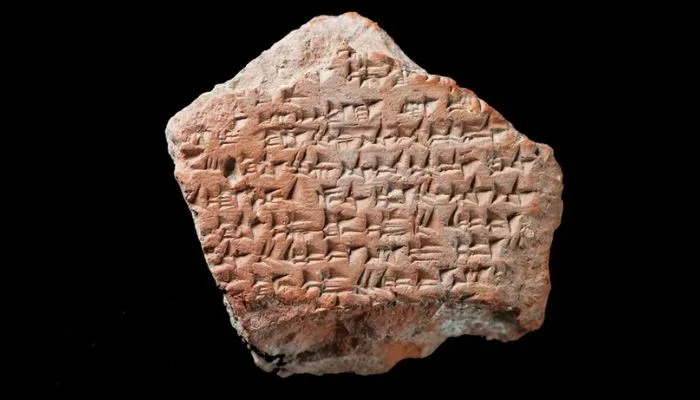
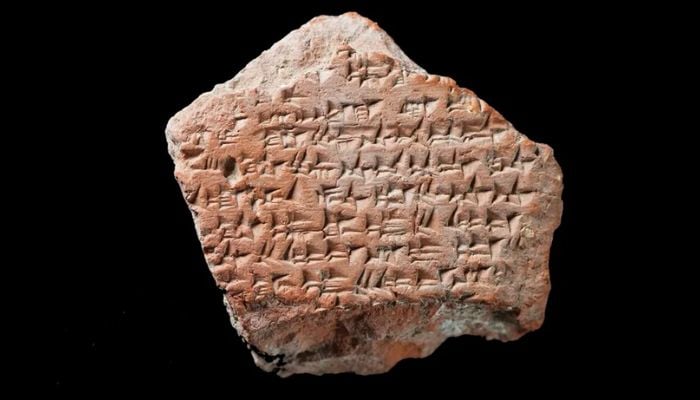
Archaeologists in Turkey have found a new fragment of the world’s oldest, 3,400-year-old, peace treaty between ancient Egypt and the Hittite Empire.
A part of the newly identified text deals with an issue that remains familiar today: people fleeing from one country to another.
The clay fragment belongs to a copy of the Treaty of Kadesh, an agreement between Egyptian pharaoh Ramesses II and Hittite king Hattusili III in the 13th century BC.
It was found at Hattusha, the former Hittite capital in what is now central Turkey. Researchers studied the piece for around a year before confirming where it belonged.
Only one side survives and the readable sections include rules covering people who fled Egypt for Hittite territory and those who went in the opposite direction.
Under the treaty, fugitives were to be returned, but they were also protected from some brutal punishments.
The wider text says their eyes, ears and other body parts were not to be mutilated and their homes and families were not to be destroyed.
The treaty came after years of conflict between two of the most powerful kingdoms of the ancient world.
Copies survived in two very different forms. The Egyptian version was carved in hieroglyphics on temple walls, while copies found at Hattusha were written in Akkadian cuneiform on clay tablets.
Other pieces were discovered more than a century ago.
Archaeologists are still excavating the site and hope more missing fragments will eventually turn up.
2026-09-24 00:05:00