


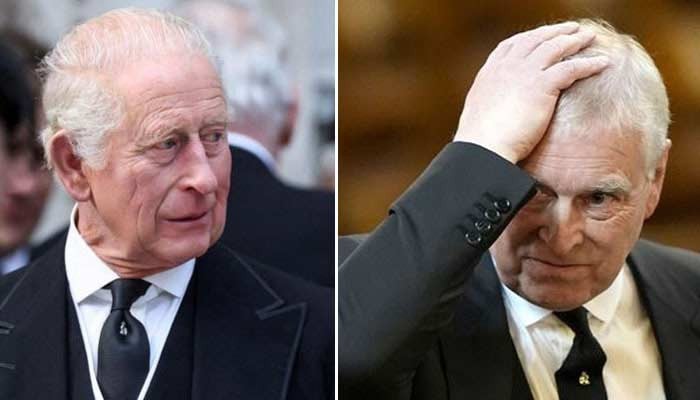
The British royal family has been under pressure in recent years amid family scandals and feuds.
The monarch, 77, needs to take drastic steps to cope with the crises and avoid unexpected situation ahead.
Newsweek has deeply examined the trend in public attitudes toward the monarchy over four decades period associated with specific royal moments amid speculations that Britain might abolish the crown.
A key dataset comes from the long-running British Social Attitudes survey, run by the National Centre for Social Research, has a detailed breakdown of royal fortune.
As per the data, which has been collected since 1983, gives respondents multiple options for expressing their opinion on the Monarchy beyond a binary decision between abolishing and keeping the crown.
In 1983, 3.1 percent of British people said they wanted to abolish the monarchy compared to 15.3 percent in 2024.
That means support for scrapping the crown has, on average, been increasing by around 0.3 percentage points per year.
If that trend continues, it would give the royals a significant lifespan of around 120 years. These projections are based on a simple linear continuation of long-term trends and do not account for potential shocks—such as changes in public perception driven by major royal events, leadership transitions or political developments.
The survey seems to be encouraging as it shows that continuing to have a Monarchy is “very important” for Britain.
In 1983, this figure sat at 64.6 percent, and by 2024, it had dropped to 24.1 percent, a slide of more than 40 points over 41 years.
In fact, the total figure for “very” and “quite” interesting slid from 86 percent to 51 percent while the total for “not very,” “not at all” and abolish the monarchy rose from 13 percent to 46 percent over that 41-year period.
Alarmingly, in just five years, British people who either want to abolish the monarchy or see it as unimportant would rise over 50 percent, giving them an outright majority.
By that time, the total percentage who view the Crown as either “very” or “quite” important would be around 47 percent.
That is quite a change from back in the 1980s. Project 10 years into the future and the percentage answering “very important” would, if current trends persist, drop by 9.9 points to 14.2 percent.
The categories “very” and “quite” together would drop to 42.5 percent, while the negatives of “not very,” “not at all” and abolish would rise to 54 percent.
On the other hand, In total, 58 percent wanted to keep the monarchy compared to 38 percent who wanted a democratically elected head of state.
This suggests that some respondents who express dissatisfaction through softer categories may shift toward abolition. There is no guarantee that changing public opinion would trigger a referendum.
However, the current Prime Minister, Keir Starmer, is unlikely to abolish the monarchy but is also expected to face a leadership challenge that could end his premiership.
There have been several events in recent months that could contribute to the debate about the value of the Firm in the UK in the near future.
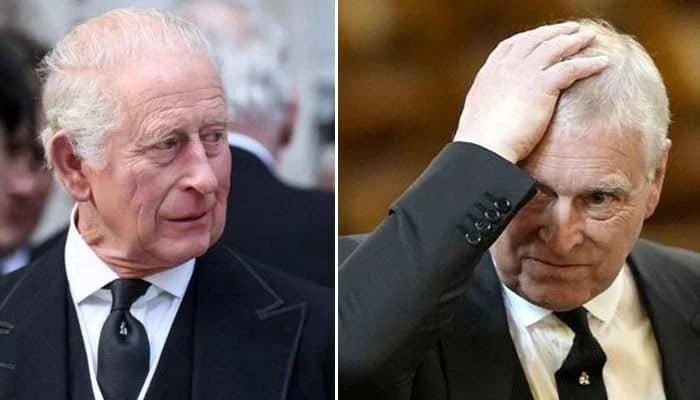
One of them was the King stripped his brother Andrew of his “Prince” and “Duke of York” titles in October over his connections to Jeffrey Epstein and Ghislaine Maxwell.
The 66-year-old former prince was then arrested by police and released under investigation in February.
The development has tested public opinion and led to discussions among U.K. Members of Parliament about a potential select committee inquiry into Mountbatten-Windsor.
On the other hand, King Charles III’s recent State Visit to America, during which he got multiple standing ovations before Congress and at a State Banquet at the White House, won praise across both sides of the political divide in Britain.
2026-05-25 19:47:00