
Scientists at Stanford University and the Arc Institute have taken one more big step into the integration of artificial intelligence (AI) into biology.
Researchers developed a way to produce new viruses “from scratch,” using AI, a breakthrough that offers hope for future medical advances and also brings with it fear regarding the possibility of misuse of this technology.
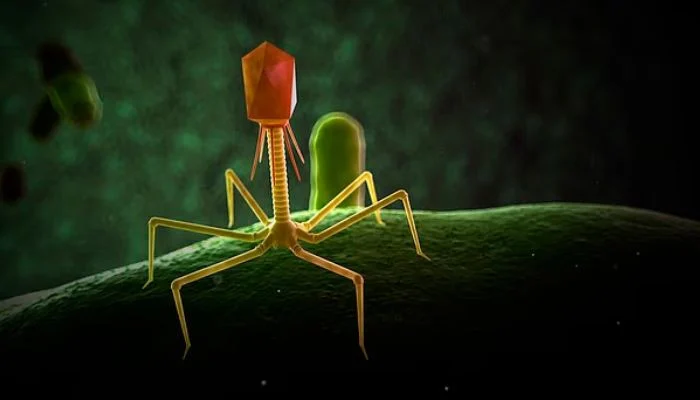
Using an AI program, the researchers were able to create hundreds of new bacteriophage genomes. Bacteriophages are viruses that target bacteria. These viruses don’t harm people; instead, they kill the bacteria by inserting their DNA into them.
In the laboratory, the researchers tested 302 designs, finding that 16 of those designed by the AI produced functional, infectious viruses that killed E. coli.
This discovery is important because the newly created virus was not based on an existing virus.
Instead, the AI created completely new viral genomes that the researchers then had manufactured and tested to determine if these viruses could live as living entities.
In time, the technology may help lead to the creation of new treatments for infections caused by bacteria that are resistant to antibiotics.
Since phage attacks bacteria naturally, AI-based versions could theoretically be engineered to specifically target bacterial strains that cannot be treated effectively with traditional antibiotics.
While many experts believe the development will be beneficial in creating new medical treatments, the very capability that makes it possible for researchers to develop new medicines could also allow someone to develop dangerous pathogens, with potential to develop bioweapons.
2026-08-07 20:03:00