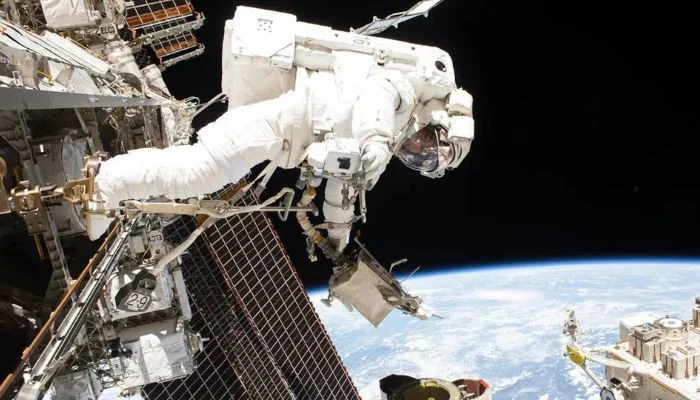

The U.S. space program has made tremendous strides in recent years. However, astronauts traveling into outer space continue to be plagued by an array of unexpected, debilitating medical problems.
A National Aeronautics and Space Administration (NASA) led team of investigators from the University of Copenhagen has identified what is believed to be the cause for a most inconvenient condition suffered by many long-term travelers into space namely, gastrointestinal (GI) disturbances.
Researchers analyzed blood samples collected from 52 astronauts who traveled aboard the International Space Station (ISS). They determined that the GI tracts of all of them were significantly affected by the effects of weightlessness in space.
Furthermore, they also found that these alterations began occurring just several weeks after they entered into the space environment. These same astronauts had increased rates of protein degradation in their gut bacteria, which remained elevated even while they returned to Earth.
Therefore, it appears that this altered function of the GI tract may be contributing to the high incidence of GI disorders encountered by astronauts when traveling in low gravity.
Normally, food travels through our GI tract due to peristaltic motion. However, since the ISS is located in a microgravity environment, researchers hypothesize that the transit time of food will be greater in the colon because food will not be moved downward by gravity.
With longer residence times of food in the colons, bacteria residing in the lower sections of the GI tract are able to break down the limited amount of fiber present and therefore produce greater amounts of protein.
This is referred to as protein fermentation, and produces numerous metabolic products (metabolites) which can enter the circulatory system and travel to other parts of the body.
Researchers say the process may be responsible for some portion of the GI symptoms experienced by long-duration space travelers.
2026-08-19 00:13:00