



When India emerged from colonial rule in 1947, many Western observers doubted that democracy could survive in a poor, multilingual, multi-religious country of continental scale. They were wrong. Against formidable odds, India built one of the world’s most remarkable democratic experiments. Elections changed governments. Courts challenged executives. Universities nurtured dissent.
Journalists exposed scandals while civil society flourished. Above all, the country’s secular constitution promised equal citizenship irrespective of religion – a radical proposition in a region repeatedly torn apart by communal violence. For decades, that democratic achievement became India’s greatest source of soft power. Even when economic growth lagged behind East Asia, India could plausibly claim something more enduring than prosperity: political pluralism. That claim has become increasingly difficult to sustain. The rise of Narendra Modi and the BJP has undoubtedly transformed India. Its supporters point to faster infrastructure development, expanded digital services, improved tax administration, welfare delivery through technology and an increasingly assertive foreign policy.
These achievements deserve acknowledgement. Yet history rarely judges governments solely by highways built or digital payment systems introduced. It also asks whether institutions have been strengthened or weakened, whether minorities have become safer or more vulnerable, whether citizens have become freer or more fearful. Measured against those standards, the BJP era increasingly resembles a prolonged democratic erosion.
Unlike classic military dictatorships, democratic backsliding seldom arrives dramatically. Elections continue. Courts still function and newspapers publish, whereas opposition parties remain legal. At the same time, institutions gradually lose their independence while formally preserving their existence.
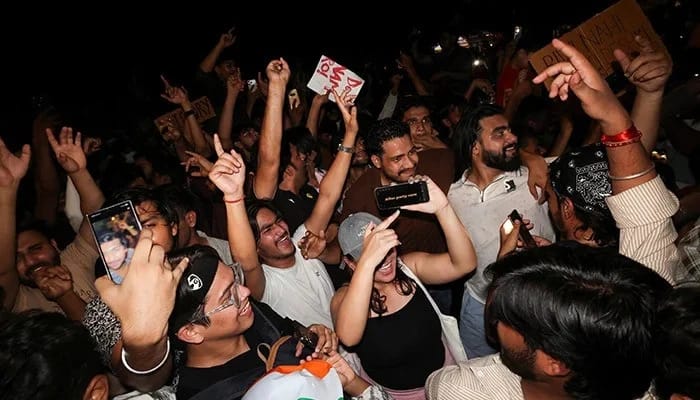
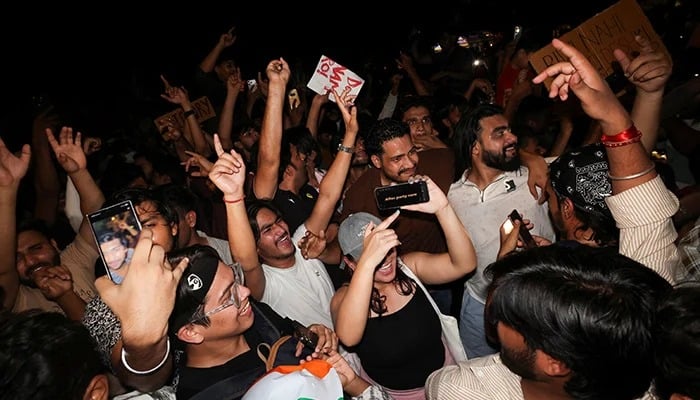
Competitive authoritarianism often wears democratic clothing and India increasingly fits that description. Perhaps the most striking feature of contemporary India is the narrowing space for dissent. Opposition politicians face relentless legal investigations. Journalists encounter growing intimidation. Civil society organisations have seen funding restrictions and regulatory pressure. Universities, historically among India’s freest intellectual spaces, have become increasingly politicised. Student activists who once represented the conscience of Indian democracy often find themselves facing police action rather than public debate. The latest youth protests over examination scandals reveal something deeper than administrative incompetence. Hundreds of thousands of students have expressed anger after repeated paper leaks and examination irregularities undermined some of India’s most competitive entrance tests.
The satirical Cockroach Janta Party, whose founders deliberately chose an insect famous for surviving every attempt at extermination, has become an unexpectedly potent symbol of youthful frustration. Its emergence is revealing. Movements built around examination leaks rarely become nationwide political phenomena unless they tap into broader grievances. India’s nearly 400 million young people face persistently high unemployment despite years of impressive headline economic growth. Many spend years preparing for fiercely competitive examinations whose credibility has increasingly been questioned by repeated leaks. For families investing their savings and hopes in education, such failures represent not merely bureaucratic errors but shattered futures.
The government’s response has often appeared more focused on controlling the narrative than addressing the underlying crisis. The movement’s social-media presence has faced restrictions. Opposition leaders supporting student demonstrations have been detained. Protesters have encountered tear gas and baton charges. Senior ministers have accused activists of belonging to an ‘anti-India gang’, a phrase that has become depressingly familiar in India’s political vocabulary. That reflex – to portray criticism as disloyalty – marks an important departure from India’s democratic tradition.
Equally troubling has been the steady redefinition of Indian citizenship through religious identity. The Citizenship Amendment Act represented a profound constitutional shift. By explicitly offering accelerated citizenship to migrants from neighbouring countries belonging to every major religious community except Muslims, parliament abandoned the religious neutrality that lay at the heart of India’s constitutional imagination. Supporters argue that the law merely protects persecuted minorities from neighbouring Islamic states. Critics counter that its significance lies less in whom it includes than whom it deliberately excludes. When combined with proposals for a nationwide citizenship register, many Indian Muslims understandably feared becoming uniquely vulnerable to bureaucratic exclusion.
Those concerns were hardly imaginary. The legislation provoked some of India’s largest protests in decades, accompanied by communal violence that left dozens dead. The Office of the United Nations High Commissioner for Human Rights described the law as “fundamentally discriminatory”. India’s international reputation as a secular democracy inevitably suffered.
The BJP rejects accusations of communalism, insisting it merely corrects historical injustices and protects Hindu civilisation after centuries of foreign domination. Such arguments resonate with many voters. Yet democracies ultimately depend less upon protecting majorities than reassuring minorities that political power will never become ethnic or religious domination. Here the record has become increasingly uncomfortable.
India’s Muslims, numbering over 200m people, increasingly report discrimination in housing, employment, public rhetoric and everyday life. Hate speech has become more visible and mob violence linked to allegations of cow slaughter has generated international concern. Bulldozers have become powerful political symbols after authorities demolished homes and businesses in several states following communal disturbances, raising questions about due process and collective punishment. Secularism, once among independent India’s defining ideals, now appears increasingly treated as an obstacle rather than an achievement.
Education offers another illustration of ideological transformation. Governments naturally revise school curricula and every country debates how history should be taught. Yet curriculum reform becomes dangerous when scholarship yields to political mythology. Under BJP governments, historians have documented increasing pressure to reinterpret India’s past through an explicitly Hindu nationalist lens. Mughal contributions are diminished and medieval Muslim rulers appear primarily as invaders rather than participants in India’s complex civilisational evolution. Textbooks increasingly emphasise ancient Hindu achievements while marginalising uncomfortable episodes or inconvenient diversity.
History becomes less an academic discipline than an instrument of nation-building. Such politicisation impoverishes rather than enriches national identity. India’s greatest historical strength has never been cultural purity but extraordinary cultural synthesis. Sanskrit, Persian, Arabic, Urdu, Tamil, Bengali and dozens of other traditions interacted across centuries to produce one of humanity’s richest civilisations. Reducing that complexity to a triumphalist nationalist narrative diminishes India itself.
Universities have not escaped these pressures. Student organisations aligned with the government have gained influence. Academic appointments increasingly attract ideological scrutiny. Scholars researching sensitive subjects sometimes report intimidation. Intellectual independence, once central to India’s universities, risks becoming subordinate to political conformity. Meanwhile, governance itself has become increasingly centralised around one individual. Modi’s political dominance has eclipsed cabinet government in favour of highly personalised leadership. State elections increasingly resemble presidential contests centred upon the prime minister rather than local issues. Strong leadership undoubtedly brings administrative efficiency. Yet excessive concentration of authority inevitably weakens institutional resilience.
The farmers’ protests illustrated both the strengths and weaknesses of contemporary governance. The government introduced sweeping agricultural reforms with minimal consultation. Farmers feared the gradual dismantling of guaranteed procurement systems protecting small producers. Demonstrations continued for more than a year despite official resistance. Eventually, facing sustained mobilisation, Modi repealed the legislation. The episode demonstrated that democratic resistance remains alive. It also exposed an increasingly confrontational style of governance that often treats negotiation as weakness until political necessity dictates retreat.
Other controversies – from military recruitment reforms under the Agnipath scheme to repeated examination scandals – suggest a broader pattern. Policies affecting millions increasingly emerge from highly centralised decision-making, followed by fierce public resistance, defensive official rhetoric and, occasionally, reluctant compromise. Perhaps most worrying is the cumulative psychological transformation of public discourse. Democracies require loyal opposition. Governments change; nations endure and political rivals should remain fellow citizens rather than enemies. And that applies to all societies, including India and Pakistan.
The writer is dean of the faculty of liberal arts at a private university in Karachi. He tweets/posts @NaazirMahmood and can be reached at: [email protected]
Disclaimer: The viewpoints expressed in this piece are the writer’s own and don’t necessarily reflect Geo.tv’s editorial policy.
Originally published in The News
2026-07-26 11:17:00