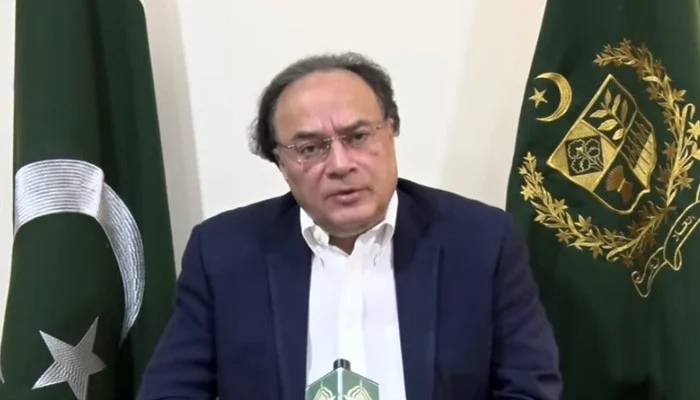
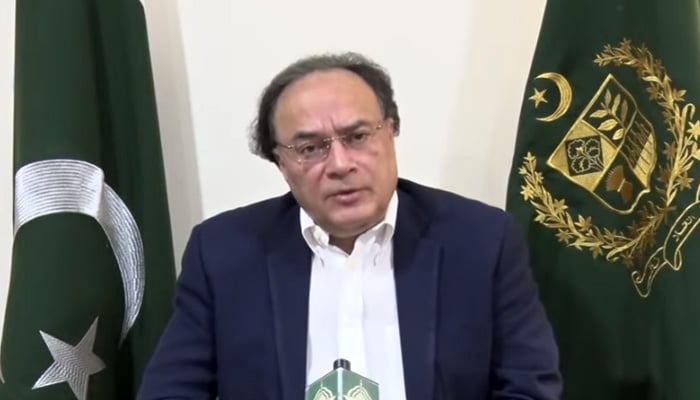
- FinMin Aurangzeb says govt working to reduce expenditure.
- Urges negotiations and consensus to resolve issues.
- JI and PTI announced separate protest campaigns.
Finance Minister Muhammad Aurangzeb has termed planned marches and sit-ins “self-inflicted pain”, warning they could cause a Rs120 billion daily loss to the national exchequer.
His remarks came as opposition parties, including Pakistan Tehreek-e-Insaf (PTI) and Jamaat-e-Islami (JI), stepped up separate protest campaigns against the government.
The PTI has announced a protest movement scheduled for September 27, with demands including the release of PTI founder Imran Khan and upholding constitutional supremacy and the rule of law.
The JI has announced a march on Islamabad over the petroleum development levy and rising fuel costs.
In his message on Sunday, Aurangzeb said such protests were difficult to understand at a time when Pakistan had made considerable efforts to achieve economic stability, warning that disruption to economic activity could undermine the country’s transition from stability towards economic development.
He said Pakistan’s foreign exchange reserves had reached $21.4 billion, the highest level in the country’s history.
The finance minister said the government was reducing expenditure, while the fiscal deficit had declined significantly and the current account was in surplus.
He said remittances were continuously increasing and exports were moving in the right direction. FinMin Aurangzeb expressed hope that the pace of economic growth would accelerate further.
Aurangzeb said GDP growth stood at 3.7% during the last financial year, while economic growth was expected to exceed 4% during the current fiscal year.
He said large-scale manufacturing was undergoing a recovery, while corporate profits and investment in the stock market had increased.
The finance minister said 11 initial public offerings (IPOs) were conducted last year, compared with five in the first two months of the current year, describing the increase as a sign of confidence in the country’s business and investment environment.
Aurangzeb said the government had set a goods export target of $32.9 billion for the current year and expected goods exports to increase by around 6%.
He said the average daily export volume was around $90 million, warning that in the worst-case scenario, strikes could reduce daily exports by up to 50%.
The minister said IT exports and services were expected to rise from $4.6 billion to $5.5 billion, while IT exports stood at around $811 million during the first two months of the current fiscal year.
He cautioned that disruptions to internet connectivity could be extremely damaging to IT exports, noting that the sector had been affected by up to 80% in past worst-case scenarios.
Rs120bn daily loss
Aurangzeb warned that disruption to economic activity could undermine Pakistan’s growth journey and result in billions of rupees in losses.
He estimated that the services sector could suffer losses of around Rs86 billion per day from disruption, while the industrial sector could face losses of approximately Rs25 billion daily.
He also estimated that disruption could result in around Rs17 billion in revenue losses, while putting the overall daily loss at Rs120 billion.
The finance minister said the immediate burden of economic disruption would fall on ordinary people and daily-wage workers, while small shopkeepers and businesses would also be directly affected.
Investment and regional challenges
Aurangzeb said tax revenues had increased by around 40% over the past two years, while Pakistan had attracted $311 million in direct foreign investment during the current period.
He said economic stability was a basic condition for attracting foreign investment, adding that foreign investment increased once confidence among domestic investors was restored.
The minister also highlighted the challenges posed by the situation in the Middle East, saying it was affecting global trade through supply-chain disruptions and higher freight and insurance costs.
Aurangzeb stressed the need to continue the country’s journey from stability towards growth, exports and investment.
He called for problems to be resolved through negotiations and consensus, saying economic stability and the momentum of growth should not be put at risk.
2026-09-20 12:08:00
News Source