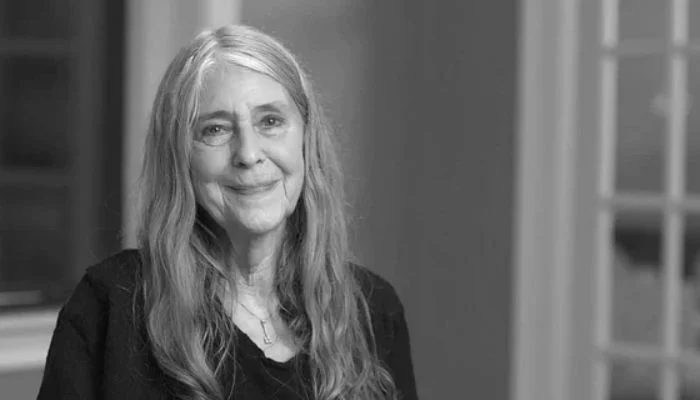
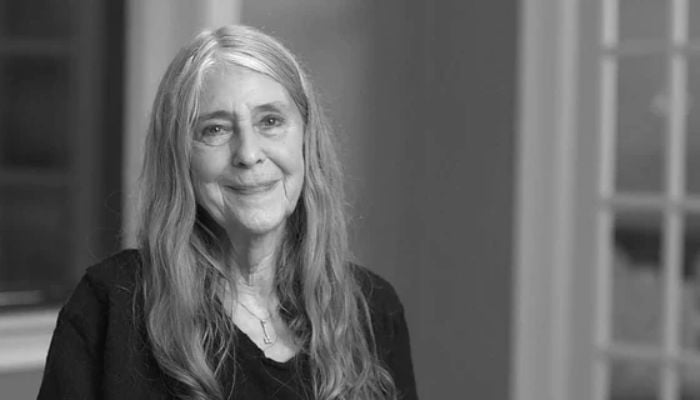
Margaret Hamilton, the computer scientist who led the team behind the flight software that helped take Apollo astronauts to the Moon, has died at the age of 90.
Hamilton died on September 30 at a hospital in Cambridge, Massachusetts, her daughter Lauren Hamilton confirmed. Her death was announced this week by MIT, where she spent much of her early career.
Her name may not be as instantly recognisable as Neil Armstrong or Buzz Aldrin.
But during one of the most tense moments of the Apollo 11 landing, the software created by Hamilton’s team was doing exactly what it had been designed to do.
Just minutes before the lunar module Eagle touched down on July 20, 1969, its guidance computer began throwing up 1201 and 1202 alarms.
The computer was overloaded.
For the astronauts and mission control, the question was simple and terrifying: could they keep going?
The answer was yes.
The software had been built to prioritise the most important jobs and drop less critical tasks when the computer became overwhelmed. Instead of trying to do everything at once and failing, it kept the calculations needed for the landing running.
NASA later pointed to that design as one of the reasons the mission was able to continue safely.
In modern terms, the Apollo computer was extraordinarily limited. It had only a tiny fraction of the memory available in even the cheapest smartphones today.
Yet Hamilton and her colleagues had to write software reliable enough to guide astronauts hundreds of thousands of miles from Earth, where simply restarting a broken system was not an option.
That philosophy of expecting things to go wrong and designing software to recover became one of Hamilton’s most important contributions.
She was also an early advocate for treating software development as a serious engineering discipline.
Hamilton is widely credited with popularising the term “software engineering” at a time when software was often considered secondary to the hardware it controlled. NASA later said ideas developed by Hamilton and her team became building blocks for modern software engineering.
Her career at MIT began in 1959 after she graduated from Earlham College with a degree in mathematics.
By the mid-1960s, she was working on the Apollo programme at MIT’s Instrumentation Laboratory and eventually led the team responsible for onboard flight software used in the Command Module and Lunar Module.
One photograph would later make her famous outside computing circles.
Taken in 1969, it shows Hamilton standing beside a stack of printed Apollo software listings almost as tall as she was.
The image became a symbol not just of the enormous amount of work behind the Moon landing, but also of the women whose roles in the early space programme were often less visible than those of the astronauts.
Hamilton later founded two software companies and continued working on ways to make computer systems more reliable.
In 2016, President Barack Obama awarded her the Presidential Medal of Freedom for her contribution to the Apollo missions and the field of software engineering.
More than half a century after Apollo 11, the lesson from Hamilton’s work remains surprisingly current.
Good software is not software that assumes nothing will go wrong.
It is software that knows what to do when something does.
2026-10-09 21:25:00