International crude oil prices have fallen significantly from the extraordinary highs witnessed during recent geopolitical conflicts.
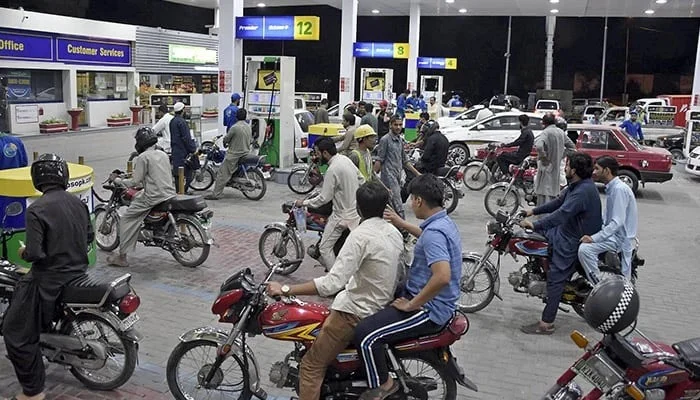
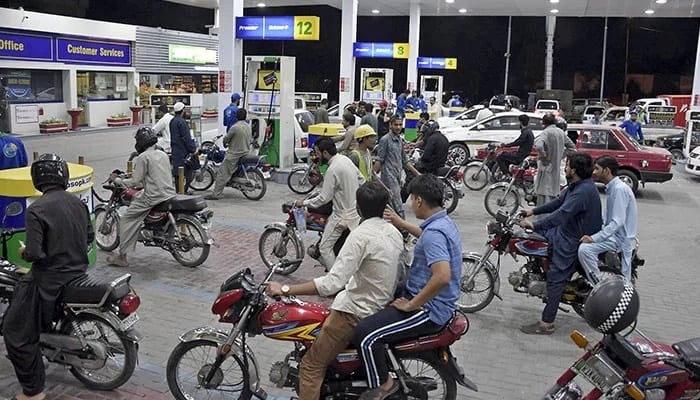
In a normal market, such a decline should have translated into lower petrol and diesel prices for consumers. Instead, millions of Pakistanis continue to pay exceptionally high prices because the reduction in international oil prices has been offset by repeated increases in the Petroleum Levy.
This has profound consequences for the entire economy. Every increase in the price of petrol and diesel raises the cost of transporting goods, cultivating crops, manufacturing products and moving people. Farmers pay more to operate tractors and tube wells. Transporters pass higher costs on to consumers. Industries lose competitiveness. Inflation rises. Ultimately, every household bears the burden.
The debate, therefore, is not merely about the price of fuel but about the direction of Pakistan’s economic policy. The Jamaat-e-Islami’s nationwide campaign calling for a reduction in petroleum prices deserves to be viewed in this broader economic context. The demand is not simply for cheaper fuel; it is for restoring to the people the benefit of lower international oil prices and reducing an artificial cost burden that has slowed economic activity, weakened industrial competitiveness and increased the cost of living for ordinary citizens.
The government’s principal justification has been the need to raise revenue. Under successive IMF-supported fiscal programmes, the Petroleum Levy has increasingly become a major source of non-tax income. Yet this raises an important policy question: should balancing public finances come at the cost of making every productive sector of the economy less competitive?
Official figures show that from FY2015-16 to FY2025-26 (partial), Pakistan collected approximately Rs5.57 trillion in Petroleum Levy. Annual collections rose from Rs149 billion in FY2015-16 to more than Rs1.2 trillion in FY2025-26 (partial).
At the same time, Pakistan spent tens of billions of dollars importing refined petroleum products such as petrol and diesel because its domestic refining capacity remained outdated and unable to meet national requirements.
This is where Pakistan’s petroleum policy reveals a serious contradiction. For years, industry experts have argued that upgrading the country’s existing refineries would require investments of approximately $5–6 billion. Such modernisation would enable Pakistan to produce substantially more Euro-V petrol and diesel, sharply reduce furnace oil production, improve fuel quality, strengthen energy security and reduce dependence on imported refined products.
Pakistan Refinery Limited (PRL) and other refineries prepared ambitious modernisation plans following the announcement of the Brownfield Refinery Policy in 2023. However, uncertainty over fiscal incentives, particularly after changes introduced through the Finance Act 2024, delayed investment decisions. Only recently has the government moved to restore the policy framework and revive investor confidence.
The inevitable question is this: if Pakistanis contributed more than Rs5.5 trillion through the Petroleum Levy over the past decade, why was a relatively small fraction of those revenues not invested in modernising the country’s refining sector years earlier?
Such an investment would not have eliminated Pakistan’s dependence on imported crude oil. But it could have significantly reduced imports of refined petroleum products, saving billions of dollars in foreign exchange every year once the upgraded refineries became operational.
The benefits would have extended far beyond the petroleum sector. Lower diesel costs would have reduced agricultural production costs and provided relief to farmers. Freight charges would have declined, reducing inflationary pressures across the economy. Manufacturing costs would have fallen, making Pakistani exports more competitive. Pressure on foreign exchange reserves would have eased.
Instead, Pakistan has continued to finance recurring expenditure through Petroleum Levy revenues while postponing investments that could reduce future energy costs.
This is not an argument for maintaining the current levy. On the contrary, the present circumstances demand an immediate review of petroleum pricing. When international oil prices fall, the benefit should reach consumers rather than being absorbed almost entirely through higher levies. Pakistan’s economy cannot be revitalised while one of its most important production inputs remains heavily burdened.
At the same time, the country needs a coherent long-term downstream petroleum strategy. If any Petroleum Levy is imposed in the future under exceptional fiscal circumstances, a clearly defined portion should be ring-fenced by law and invested exclusively in refinery modernisation, strategic petroleum reserves, pipeline infrastructure and other national energy assets. Citizens should be able to see that temporary sacrifices are creating permanent national capacity.
Public finance is ultimately about trust. Citizens are more willing to bear temporary burdens when they know their contributions are financing productive investments rather than merely supporting recurring expenditure. The experience of the past decade shows the cost of failing to make that distinction.
Pakistan today stands at a crossroads. One path continues to rely on higher levies, higher production costs and repeated dependence on external financing. The other seeks to revive economic growth by allowing citizens to benefit from lower international oil prices while simultaneously investing in infrastructure that strengthens the country’s long-term energy security.
The choice should not be difficult. Reducing petroleum prices in line with international market trends would provide immediate relief to households, farmers, transporters and industry. Investing strategically in refinery modernisation would ensure that Pakistan is better prepared for the next global energy shock.
Pakistan’s petroleum policy should no longer be judged by how much revenue it extracts from consumers but by how effectively it lowers the cost of doing business, protects the public from avoidable price shocks and builds the energy infrastructure required for sustainable national prosperity.
The writer is the Ameer of the Jamaat-e-Islami, Pakistan.
Disclaimer: The viewpoints expressed in this piece are the writer’s own and don’t necessarily reflect Geo.tv’s editorial policy.
Originally published in The News
2026-08-11 09:22:00