
Pakistan’s economy is entering a critical phase of macroeconomic stabilisation. Following several years of high inflation, exchange-rate volatility, and external financing pressures, the country has begun restoring economic stability through fiscal consolidation, tight monetary policy, and reforms under the International Monetary Fund (IMF)-supported programme.
Headline inflation, which exceeded 29% in FY2023–24, has fallen to single digits, foreign exchange reserves have recovered to around $20 billion, and the policy rate has declined from its peak of 22%. Despite these improvements, structural challenges including a narrow export base, high public debt, and heavy dependence on imported energy still persist.
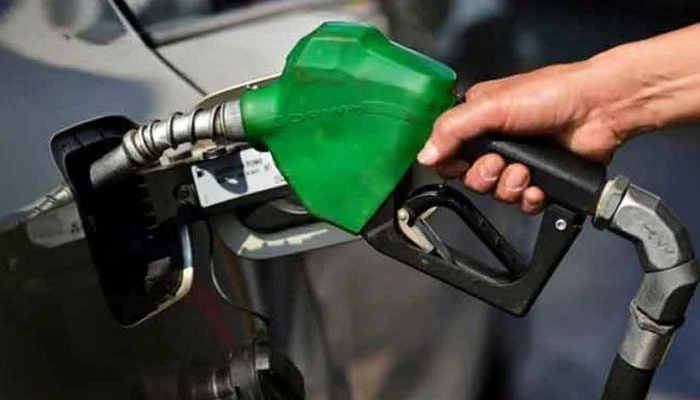
Against this backdrop, the government’s proposal to introduce daily petroleum price adjustments represents another step towards market-based energy pricing. While economically rational, the key policy question is whether Pakistan’s institutions and economy are ready for such a transition.
The step follows Pakistan’s gradual shift from monthly price revisions before 2022, to fortnightly adjustments in 2022 and weekly revisions introduced in May 2025. Its objective is to improve price transparency, reduce speculative stockpiling and align domestic fuel pricing with international market practices. The timing was significant because Pakistan imports 80–85% of its petroleum requirements, while petroleum products account for roughly one-quarter of the country’s import bill, making fuel prices a major driver of inflation and external sector pressures. Although automatic pricing can improve market efficiency, fiscal discipline and policy credibility, its success ultimately depends on whether Pakistan’s regulatory institutions and market conditions are robust enough to support such a reform.
Yet, the debate extends beyond economic efficiency to institutional readiness. Countries that successfully implement daily fuel-price adjustments generally have stable currencies, low inflation, competitive fuel markets, and strong regulatory institutions. Pakistan, however, continues to face exchange-rate volatility, elevated financing costs and governance constraints. In such an environment, greater price flexibility could increase uncertainty rather than improve market efficiency.
Proponents argue that daily pricing curbs speculative behaviour under the weekly system by reducing opportunities for dealers to delay purchases or build inventories ahead of anticipated price changes. While this would improve pricing transparency, the benefits must be weighed against the wider economic costs. Fuel is a key production input, influencing transport, agriculture, manufacturing and household expenditure, meaning that even small fluctuations quickly spread across the economy.
The greater concern is inflation expectations. Businesses often adjust prices in anticipation of rising costs and daily fuel-price revisions could end up encouraging firms to build precautionary risk premiums into transport and production costs rather than revise prices continuously. In an economy where prices rise faster than they fall, this could reinforce inflationary pressures and complicate the State Bank of Pakistan’s efforts to maintain price stability. The issue, therefore, is whether we have first developed the institutional capacity and macroeconomic resilience required to make such a reform effective.
As Pakistan relies overwhelmingly on road transport, diesel prices directly influence production, logistics and consumer prices across the economy. Agriculture, which contributes nearly one-quarter of GDP and employs over one-third of the labour force, is particularly vulnerable. Diesel powers farm machinery, irrigation and crop transportation, meaning that frequent fuel-price fluctuations would increase production uncertainty at a time when farmers are already facing rising fertiliser prices, climate shocks, water scarcity and expensive credit. The likely outcome would be higher food prices and greater pressure on food security.
Manufacturing and exports would face similar challenges. Industries already contend with high electricity tariffs, elevated borrowing costs, and fragile supply chains, while exporters depend on stable logistics costs to remain competitive. Small and medium enterprises (SMEs), with limited financial flexibility, are more likely to absorb uncertainty by adding risk premiums to prices than by revising quotations daily. Consequently, frequent fuel-price adjustments could weaken industrial competitiveness, reinforce inflationary pressures, and dilute the benefits of lower international oil prices. Ultimately, households would bear the greatest burden through higher transport costs and more expensive essential goods.
Beyond its economic consequences, daily petroleum pricing presents an important governance challenge. Petroleum prices remain one of Pakistan’s most politically sensitive policy instruments because they directly influence household welfare, transport fares, and inflation expectations. Frequent price changes, even when economically justified, can easily be perceived by consumers as policy instability rather than market transparency.
Pakistan’s petroleum market still faces concerns regarding market concentration, information asymmetries, periodic supply disruptions and weak enforcement against anti-competitive practices. Unless regulatory oversight and competition policy are strengthened simultaneously, more frequent price adjustments alone may not prevent hoarding, collusion, or asymmetric price transmission, where prices rise quickly but decline only gradually.
Supporters of daily pricing often point to countries such as India, Singapore, and the UAE, where fuel prices are revised more frequently. These comparisons, however, overlook important structural differences. Those economies operate with relatively stable exchange rates, lower inflation, stronger regulatory institutions, efficient logistics networks, and more competitive fuel markets. Pakistan continues to face fiscal pressures, exchange-rate volatility, governance constraints and structural bottlenecks that shape how market reforms are transmitted through the economy. Therefore, international experience offers useful lessons, but it should inform, not dictate, Pakistan’s policy choices. Reforms that succeed elsewhere cannot simply be transplanted without considering domestic institutional realities.
This does not mean Pakistan should abandon market-based petroleum pricing. Transparent and rules-based pricing remains essential for improving fiscal discipline, reducing political interference, and strengthening investor confidence. The challenge is one of sequencing rather than direction. Instead of moving immediately to daily adjustments, policymakers could have first consolidated the existing weekly mechanism by enhancing transparency in the pricing formula, strengthening Ogra’s monitoring and enforcement capacity, introducing digital systems to track inventories and retail compliance, and improving coordination among the Petroleum Division, competition authorities, and oil marketing companies.
At the same time, greater investment in strategic petroleum reserves, public transport, renewable energy, and electric mobility would reduce Pakistan’s dependence on imported fuels and make the economy more resilient to future external shocks.
Pakistan undoubtedly needs a modern and market-oriented energy pricing system. However, successful reforms require more than sound economic logic; they require strong institutions, effective regulation and an economy capable of absorbing greater market volatility. At a time when Pakistan is still recovering from inflation, high interest rates and external vulnerabilities, policy stability may be as important as market efficiency.
Daily petroleum pricing may eventually become an appropriate reform, but its success will depend not on the frequency of price adjustments alone, but on whether Pakistan has built the institutional capacity, regulatory safeguards, and macroeconomic resilience needed to make the reform work. The real policy question, therefore, is whether right now was the right time to make this change.
The writer is affiliated with the Sustainable Development Policy Institute (SDPI), Islamabad and holds a PhD in Applied Economics. He can be reached at: [email protected]
Disclaimer: The viewpoints expressed in this piece are the writer’s own and don’t necessarily reflect Geo.tv’s editorial policy.
Originally published in The News
2026-08-21 09:04:00