Pakistan’s economic debate often oscillates between two extremes: calls for aggressive fiscal austerity on one side and demands for expansionary spending on the other. Yet beneath this polarised discourse lies a more fundamental question: what happens when a country persistently underinvests in its own productive future?
This question has become especially important as Pakistan prepares its new federal budget amid extraordinary global uncertainty. Domestically, the economy has achieved a degree of macroeconomic stabilisation after a painful adjustment cycle, but stabilisation alone does not automatically generate growth, jobs, rising incomes or economic optimism.
Pakistan today faces a widening output gap – the difference between what the economy is currently producing and what it could produce if labour, capital, infrastructure and technology were utilised more effectively. The country’s population is now approaching 250 million, making Pakistan the world’s fifth-most populous nation and one of the youngest large economies. Every year, millions of young Pakistanis enter the labour market, yet the economy continues to operate below its productive potential. Formal job creation remains weak, underemployment is widespread, and many workers are increasingly pushed into low-productivity informal activities simply to survive.
This is fundamentally an investment problem. In such an environment, development spending becomes more than a budgetary allocation. It becomes an economic stabiliser, a productivity enabler and a growth instrument.
Pakistan’s stabilisation strategy has rightly prioritised protecting vulnerable households through targeted social protection mechanisms such as BISP. Under the IMF programme, cash transfer spending is protected through explicit performance criteria and inflation adjustments to preserve the purchasing power of low-income households. This reflects an important commitment to social protection during fiscal consolidation.
Yet an equally important question deserves attention: can a country sustainably reduce poverty and vulnerability without simultaneously protecting growth-generating public investment? Social protection is essential for cushioning vulnerable households, but social transfers alone cannot substitute for productive economic expansion. Sustainable poverty reduction ultimately depends on employment creation, rising productivity, private investment and economic growth. Development spending through the PSDP plays this role precisely by expanding the productive capacity of the economy.
Much of the public discourse in Pakistan treats the Public Sector Development Programme (PSDP) as a fiscal burden rather than a strategic economic investment. Critics frequently point to governance failures, politically motivated schemes, procurement irregularities and execution lapses. Some of these concerns are valid. But inefficiency in development spending is an argument for reforming PSDP governance, not for abandoning development itself.
No serious economy in history industrialised, strengthened exports, improved productivity or built economic resilience without sustained public investment in infrastructure, energy systems, transport corridors, water security, technology and human capital. Pakistan’s challenge is not that it spends too much on development. The deeper problem is that it spends too little, too slowly, and often without strategic prioritisation due to policy discontinuity, fragmented priorities and recurring political instability.
Pakistan’s own economic history offers a revealing lesson. Periods of relatively higher public investment have generally coincided with stronger economic growth, while periods of compressed development spending have aligned with weaker growth outcomes. Public investment generates multiplier effects across the economy by reducing transaction costs, improving connectivity, expanding productive capacity and encouraging private-sector confidence.
Countries that consistently sustained higher development spending were better able to reduce infrastructure bottlenecks, lower logistics and energy costs, improve market access, and strengthen industrial competitiveness. Pakistan’s public investment effort, by contrast, has remained substantially lower than regional peers. While Pakistan’s public investment averaged roughly 1.3 per cent of GDP, India invested around 3.5 per cent, Bangladesh 4.0 per cent and Vietnam more than 6 per cent of GDP. These economies did not achieve export competitiveness through stabilisation alone; they invested aggressively in infrastructure, industrial ecosystems, connectivity and human capital.
Pakistan, by contrast, continues to suffer from chronic underinvestment, which carries substantial economic costs. Infrastructure gaps, logistics inefficiencies, weak connectivity, transmission losses, and inadequate urban systems are estimated to cost the economy nearly 6–8 per cent of GDP annually. In effect, underdeveloped infrastructure acts like a hidden tax on businesses, exporters, farmers and households. Higher transport costs, unreliable energy systems, congestion and weak supply chains reduce productivity across the economy and undermine competitiveness.
The discussion, however, should not be confined to federal PSDP alone. Pakistan’s national development effort comprises the federal PSDP and the Annual Development Programmes (ADPs) of provincial governments. Together, they represent the country’s total public development outlay, though their responsibilities are fundamentally different.
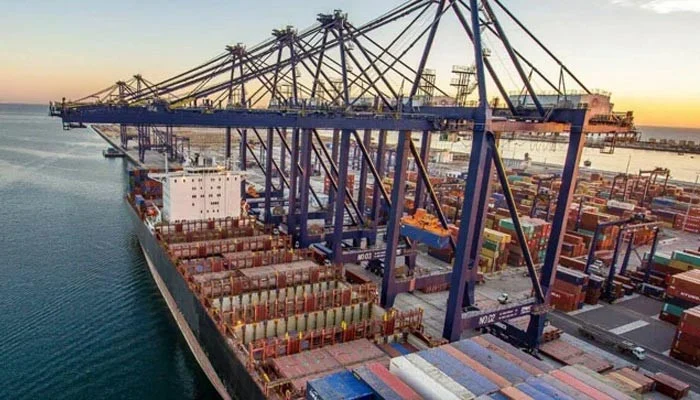
Provincial governments primarily finance social sectors such as health, education, municipal services, local infrastructure and human development. The federal PSDP, by contrast, is responsible for strategic national projects that provinces neither have the fiscal space nor the constitutional authority to undertake. These include motorways, railways, ports, dams, water reservoirs, energy transmission systems, digital connectivity and cross-provincial infrastructure corridors.
This distinction matters because Pakistan’s future growth increasingly depends on overcoming structural bottlenecks that require coordinated national investment. Water security, energy reliability, regional connectivity, logistics modernisation and export infrastructure cannot be addressed through fragmented interventions alone.
The current budget debate is therefore taking place at a particularly sensitive moment. Under normal circumstances, private investment acts as the principal engine of growth. But during periods of heightened uncertainty, businesses naturally delay expansion decisions. Investors become cautious when global demand is slowing, energy prices remain volatile, financing costs remain elevated and geopolitical risks intensify. This is precisely when public investment performs a countercyclical role: sustaining aggregate demand, supporting employment, reducing uncertainty and crowding in future private investment.
The compression in development spending has also weakened public investment’s traditional role in crowding in private-sector activity. Pakistan’s investment-to-GDP ratio has declined significantly in recent years alongside lower real development spending and weaker growth momentum. When public infrastructure investment slows, private investment often becomes more cautious rather than more confident.
Equally important, Pakistan’s effective development effort has already weakened over time. Even where nominal PSDP allocations appear sizeable, the real value of development spending has steadily eroded due to inflation, exchange-rate depreciation, and rising construction costs. In real terms, the state’s capacity to build infrastructure, expand connectivity, and finance strategic projects is significantly smaller today than it was around 2017–18.
Since FY2009, social protection allocations have expanded far more rapidly than development spending. BISP allocations increased from roughly Rs 34 billion to over Rs700 billion, while PSDP allocations grew much more slowly over the same period. Yet despite expansion in social protection spending, unemployment, youth joblessness, poverty and informality remain persistent challenges. This does not diminish the importance of social protection; rather, it highlights that welfare support alone cannot substitute for sustained investment-led growth.
The answer, however, is not indiscriminate expansion of development spending. Pakistan cannot afford inefficient or politically fragmented investment. The real challenge is strategic public investment – focusing on projects that improve productivity, reduce logistics costs, strengthen export competitiveness, enhance water and energy security, modernise agriculture, support technology adoption and crowd in private-sector growth.
Macroeconomic stabilisation is necessary, but stabilisation without growth risks becoming socially and economically unsustainable. Fiscal consolidation that protects consumption but neglects productive capacity may stabilise indicators temporarily without generating enough jobs, incomes, exports or long-term resilience.
At this moment, Pakistan does not simply face a fiscal choice; it faces a growth choice. For a country of nearly 250 million people, underinvestment is not fiscal prudence. It is deferred growth, productivity, competitiveness and opportunity.
The real question before the prime minister is no longer whether Pakistan can afford the PSDP but whether Pakistan can afford the long-term cost of underinvestment itself.
The writer is the vice-chancellor of the Pakistan Institute of Development Economics (PIDE), and a member of the Planning Commission of Pakistan.
Disclaimer: The viewpoints expressed in this piece are the writer’s own and don’t necessarily reflect Geo.tv’s editorial policy.
Originally published in The News
2026-06-02 09:57:00