- Court rules India cannot suspend or terminate treaty.
- Neutral expert to rule on India’s projects by July 2027.
- Pakistan initiated proceedings against India in August 2016.
In a major boon for Pakistan in its dispute over the ‘one-sided’ suspension of the Indus Waters Treaty (IWT), the Permanent Court of Arbitration in The Hague has ordered India to suspend work on hydro projects and uphold the treaty.
The Hague-based court said the Indus Water Treaty between the two countries remained fully in force, as India had no justification for ending or suspending the agreement.
The court said a neutral expert, appointed by the World Bank, would judge by July 2027 whether the construction of hydroelectric plants in the Himalayan region was in line with the treaty.
Following the killing of 26 people in Indian Illegally Occupied Jammu and Kashmir in April 2025, India held the Indus Waters Treaty with Pakistan in abeyance. New Delhi accused Islamabad of orchestrating the deadly militant attack, an allegation that Pakistan denies.
On the basis of these baseless allegations, India started the war against Pakistan in May 2025, which was the heaviest fighting to have occurred between the two neighbouring nations in decades, before a ceasefire was reached and brokered by the US.
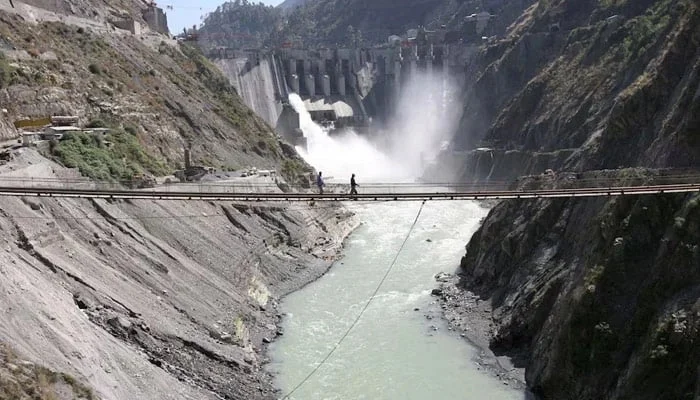
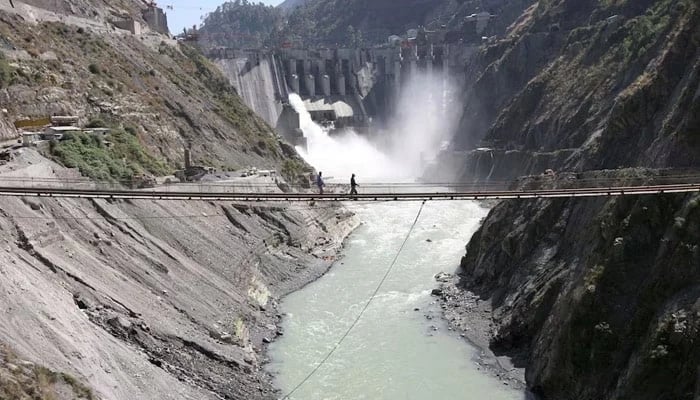
In its ruling issued on Monday, The Hague-based court also imposed interim measures limiting construction work on India’s Ratle Hydroelectric Plant in the Kashmir region, prohibiting India from concreting the dam wall and power intake structure above certain levels until 90 days after a neutral expert’s final decision, which is expected in July 2027.
The Court of Arbitration is chaired by Prof Sean D Murphy of the United States. The other members included Prof Wouter Buytaert of Belgium, Prof Jeffrey P Minear of the United States, Judge Awn Shawkat Al-Khasawneh of Jordan, and Dr Donald Blackmore of Australia, according to a press statement issued by the court.
The court examined India’s April 2025 decision to hold the Indus Waters Treaty “in abeyance” following an attack in IIOJK, finding that such a decision could only mean India was claiming the treaty was either suspended or terminated.
The court examined all potential grounds on which India could take such action, including those cited in India’s own public statements, and found unanimously that none of them could justify suspension or termination of the agreement.
“Accordingly, the Indus Waters Treaty remains fully in force, and India must observe its obligations under the treaty, including those relating to the design and operation of its hydro-electric projects on the western rivers,” the court said.
India’s Hydropower projects
On Pakistan’s separate request for interim measures, the court considered whether construction work at the Ratle Hydroelectric Plant should be limited pending the neutral expert’s decision on whether the plant’s design complied with the treaty.
The court imposed measures prohibiting India from concreting the Ratle dam wall and power intake structure above certain levels until 90 days after the Neutral Expert’s final decision, expected around July 16, 2027.
A reporting measure relating to the Ratle construction schedule was also imposed.
The arbitration also concerns the design of certain components of run-of-river hydroelectric projects that India is permitted under the treaty to construct on the Indus, Jhelum and Chenab rivers and their tributaries before they flow into Pakistan.
The proceedings specifically concern two Indian projects — the Kishenganga Hydroelectric Plant and the Ratle Hydroelectric Plant — both of which are also the subject of parallel proceedings before the neutral expert, a highly qualified engineer appointed by the World Bank.
Pakistan initiated the arbitration proceedings in August 2016 under the Indus Waters Treaty. Following India’s objections, the World Bank paused the process of appointing the court chairman and the neutral expert in December 2016, a pause that was lifted in 2022.
The court subsequently issued an Award on Competence in July 2023, rejecting India’s objections to the court’s jurisdiction. Earlier decisions included an Award on Issues of General Interpretation issued in August 2025, a decision on Pakistan’s Request for Clarification in November 2025, and an Award Concerning Maximum Pondage in May 2026.
2026-08-31 16:22:00
News Source