



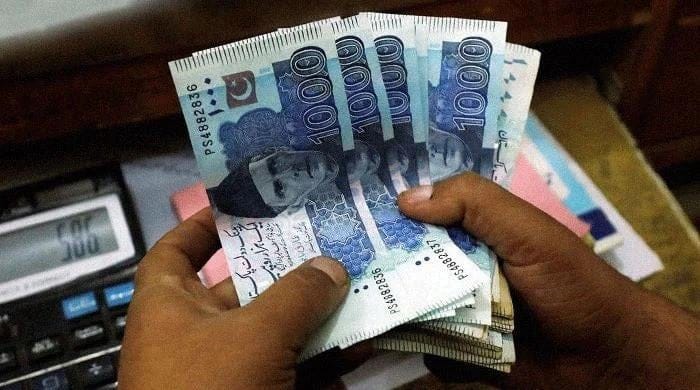
As Pakistan enters another budget season, the familiar flood of figures has returned. For economists and financial analysts, these numbers outline the government’s fiscal priorities. For ordinary citizens, however, they often generate more confusion than clarity. The problem is not the size of the numbers but the language in which they are presented.
Ask a shopkeeper, a teacher, a farmer or a salaried employee what Rs18.8 trillion means, and most will struggle to relate the figure to their daily experience. Yet the same person instantly understands what 18 lakh, 18 crore, or 1,800 crore represents. This disconnect reveals a deeper issue in Pakistan’s public communication: the coexistence of two numbering systems that tell the same story in very different ways. Pakistan continues to use the South Asian system in lakh, crore, arab, kharab in everyday life. At the same time, government ministries, the State Bank, international lenders and media outlets frequently use the Western system of millions, billions and trillions. The result is a kind of numerical bilingualism that confuses consumers and sometimes distorts public perception.
Consider a development project worth Rs50 crore. To most Pakistanis, this sounds substantial and tangible. Express the same amount as Rs500 million, and it suddenly feels smaller, more abstract and less relatable, even though the value is identical. Similarly, a budget deficit reported in ‘billions of dollars’ can sound overwhelming, but many citizens cannot translate the figure into the units they use daily. Behavioural economics calls this numerical framing, where people react not only to the value of a number but also to how it is framed. Crores feel big and concrete; billions feel distant and technical.
Consumers play multiple roles in society, including those of taxpayers and citizens with distinct rights and responsibilities. In addition to paying direct and indirect taxes, consumers purchase almost every service, commodity and municipal service provided by the government and its agencies. They pay court fees to seek justice, obtain licences, pay tolls to use highways, register vehicles through prescribed fees and pay for water supply, garbage collection, property taxes, property transfer fees and taxes, and out-of-pocket healthcare expenses. Consumers also pay fees for the authentication and verification of educational degrees, obtaining police-issued character certificates, and accessing a wide range of other public services.
This issue becomes especially relevant during budget season, when the government communicates its priorities for the coming year. Positive indicators regarding development spending, subsidies, and social protection programmes are often presented in crores and lakhs, units that resonate with domestic audiences. Meanwhile, discussions of debt obligations, fiscal deficits and international liabilities frequently rely on the language of billions and trillions used by global financial institutions. This pattern does not always reflect deliberate manipulation. Much of it stems from institutional habit. The Ministry of Finance aligns its terminology with international reporting standards. Provincial governments use crores and lakhs. The State Bank prefers millions and billions. IMF and World Bank documents use the Western system exclusively.
But the consequences are significant. When one government document refers to Rs120 billion and another refers to Rs12,000 crore, citizens must perform mental conversions simply to understand whether the figures are comparable. Journalists face similar challenges. Students studying economics encounter both systems simultaneously. Even policymakers sometimes struggle to communicate across institutions. The confusion affects more than comprehension; it affects transparency and accountability. Citizens cannot evaluate public policy if they cannot understand the numbers describing it. A budget outlay of Rs18.8 trillion may grab headlines, but without context, it becomes a symbol rather than information.
In numerical terms, one trillion is equal to one thousand billion or one lakh crore (100,000 crore). Thus, Pakistan’s federal budget outlay of Rs18.8 trillion can also be expressed as approximately Rs18.8 lakh crore, a format that may be more familiar to many South Asian audiences. In the South Asian numbering system, the first comma comes after three digits from the right, and thereafter commas are placed after every two digits. While in the Western/International numbering system, commas are placed uniformly after every three digits from the right.
This year, the stakes are even higher. Pakistanis are grappling with inflation, rising utility costs and economic uncertainty. Families across the country are trying to plan their yearly expenses, assess how much prices may rise and prepare for financial shocks. Yet the very numbers that should help them prepare are often inaccessible. Instead of trapping citizens in a labyrinth of conversions, the budget should help them understand what lies ahead. If the government is short of revenue, citizens know what follows: additional taxes, higher utility charges, inflationary pressures, and indirect levies that quietly raise the cost of living. These are the invisible shocks that hit households hardest. When numbers are unclear, these shocks feel sudden and unpredictable. When numbers are clear, families can plan.
A household preparing its yearly budget should be able to understand how much indirect taxation may rise, how inflation might affect groceries, fuel, and school fees, how government borrowing may push up electricity tariffs, and how new duties may affect everyday items. Clarity in national budgeting directly supports clarity in household budgeting. Yet the current communication style often leaves citizens guessing. A figure expressed in trillions may be mathematically accurate, but it does little to help a family understand whether their monthly expenses will rise by 5.0 or 15 per cent. When the government speaks in a language that citizens do not use, the distance between policy and daily life widens.
The coexistence of two numbering systems is not unique to Pakistan, but it is particularly entrenched here. The South Asian system is woven into everyday language, business transactions and cultural understanding. The Western system, meanwhile, is essential for international reporting, financial analysis and global comparison. Both systems serve legitimate purposes. The problem is not their existence; it is their inconsistent use. When government agencies switch between systems without explanation, they create barriers to understanding. When media outlets repeat figures without translating them into familiar units, they widen the gap between policymakers and citizens. When official documents become increasingly technical, they push the public further away from meaningful engagement.
The solution is not complicated. It does not require new institutions, expensive reforms or complex legislation. It requires consistency and transparency. Government documents should routinely present major figures in both formats. A budget outlay of Rs18.8 trillion could also be expressed as 18,80,000 crore. Development allocations could include both crore and billion equivalents. Major fiscal indicators could be accompanied by simple explanatory notes and conversion tables. Such measures would impose minimal costs while significantly improving public understanding.
Numbers are not just mathematical expressions; they are tools of communication. When citizens cannot understand the figures used to describe their economy, public debate weakens and accountability suffers. A democracy depends on informed citizens. If the public cannot interpret the numbers that shape national policy, it cannot hold leaders accountable.
As Pakistan grapples with fiscal pressures, rising public expectations and the need for economic reform, clear communication matters more than ever. Budget numbers should help citizens understand national priorities, not leave them searching for a calculator. The federal budget is a statement of how public resources will be raised and spent on behalf of millions of citizens. Those citizens deserve information that is understandable, transparent and consistent information that helps them prepare for the year ahead, anticipate financial pressures and protect their households from invisible shocks.
The writer is the CEO of The Network for Consumer Protection and a member of the 19-member Advisory Council of Consumers International. He can be reached at:[email protected]
Disclaimer: The viewpoints expressed in this piece are the writer’s own and don’t necessarily reflect Geo.tv’s editorial policy.
Originally published in The News
2026-07-03 09:09:00