A few days ago, I watched a press conference held by government representatives, including Shaza Fatima Khawaja, Attaullah Tarar and Ali Pervaiz Malik.
I listened carefully, though it was difficult to sit through because it was repetitive, inadequately prepared and lacked the precision one would expect from an official briefing on a scheme involving billions of rupees of public money.
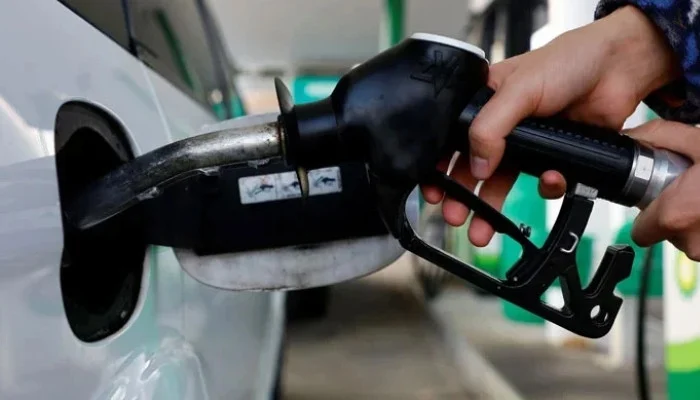
The announced mechanism is this: Rs100 per litre relief; motorcycles, two- and three-wheelers receive five litres per week, while cars up to 800cc receive 10 litres every ten days, or 30 litres per month. Registration is through a SIM linked with the applicant’s CNIC and vehicle information. Before buying petrol, the beneficiary sends ‘TOK’ to 9771 and presents the token at a petrol station. The ECC has initially approved Rs75 billion, while the petroleum minister has said the programme could cost roughly Rs25-30 billion per month. It is described as relief for ‘lower-income segments’, limited to non-commercial users and one vehicle per user, through a digital Fuel Pass System.
As a student of law, however, I remain deeply sceptical. First, where is the poverty test? The registration process appears to verify mainly CNIC, SIM and vehicle registration. No publicly disclosed income threshold, NSER poverty score, salary check, tax-return test, asset test or BISP-style socioeconomic assessment appears to determine whether the applicant is actually poor.
Owning an 800cc car does not establish poverty. A comfortable household may own several eligible vehicles through separate adult CNICs, while a genuinely poor household with no vehicle receives nothing. If the object is poverty relief, household economic circumstances should matter more than engine size.
Second, ‘minimum checks and balances’ combined with a high-value digital token creates obvious leakage risks. Ease of access is desirable, but weaker registration controls require stronger point-of-sale verification. Unless the pump independently verifies the beneficiary, eligible vehicle, and transaction in real time, tokens could be forwarded, photographed, shared or otherwise misused. A fast digital process is not necessarily a secure one.
Third, a digital transaction does not prove that petrol was actually dispensed. The system may record that 10 litres were sold, but a computer entry is not physical proof that 10 litres left the dispensing machine and entered the eligible vehicle. If reimbursement is based on digital records, a false entry can become a genuine government payment. Claims therefore need reconciliation with dispensing-machine data, POS records, fuel inventory, OMC deliveries and invoices. Petrol-pump and beneficiary collusion must also be anticipated.
Fourth, petrol is fungible. Once purchased, subsidised petrol cannot realistically be distinguished from ordinary petrol. A Rs100-per-litre price gap creates an incentive to divert or resell it. Even modest leakage, multiplied across millions of beneficiaries, could become financially enormous. Technology may track the entitlement, but it cannot easily prove where the fuel is ultimately consumed.
Fifth, the system is only as reliable as the databases behind it. Provincial vehicle records may include sold-but-not-transferred vehicles, scrapped vehicles, deceased owners, duplicate records, incorrect engine capacities or inactive registrations. A sophisticated platform cannot repair bad source data. Pakistan’s experience with BISP, Utility Stores and commodity subsidies shows that computerisation does not eliminate fraud; databases require continuous cleaning, re-verification, reconciliation and independent audit. Wrongdoing may occur through transactions that look perfectly proper on paper.
Sixth, eligibility remains confused. The public announcement refers to motorcycles, rickshaws and Qingqis, but the ECC description reportedly restricts the scheme to ‘non-commercial users’. Does a working rickshaw driver qualify? What about a shopkeeper using a motorcycle to move goods? If the scheme excludes commercial use, it may do little to reduce small businesses’ operating costs and therefore have a narrower anti-inflation effect than advertised. Petrol dealers themselves have also raised concerns about fake identification, verification difficulties and disputed transactions.
Seventh, the rollout appears extremely rapid for a financial system of this size. It requires identity verification, integration of federal and provincial databases, petrol-station participation, token generation, cybersecurity, fraud detection, reimbursement, complaints handling and auditing. A scheme involving millions of users and potentially hundreds of billions of rupees should be stress-tested and independently audited before full-scale rollout.
Eighth, the fiscal cost is enormous. At Rs25-30 billion per month, ten months could cost around Rs300 billion. The original analysis notes that this is roughly 30 per cent of the Rs1 trillion federal PSDP allocation for FY2026-27 and about two-and-a-half times the federal functional allocation for Health Affairs and Services cited there. There is no ‘free’ Rs100 discount: the cost must come through reduced expenditure, taxation, borrowing or diversion of existing allocations. The Rs75 billion Technical Supplementary Grant finances only about two-and-a-half to three months at the stated burn rate. The government should disclose whether the programme then ends or whether it will seek another Rs200-225 billion.
Ninth, this raises a serious public-finance and parliamentary scrutiny question. A Technical Supplementary Grant is not simply newly created money. The government should disclose which allocation has been surrendered or adjusted to finance the Rs75 billion. If money intended for development, health, education or infrastructure is being redirected, parliament and the public are entitled to know. Supplementary expenditure must remain within the statutory and constitutional framework governing the Federal Consolidated Fund and parliamentary authorisation.
Tenth, the targeting itself is difficult to defend. Millions of the poorest citizens own no motor vehicle, so a scheme supposedly for lower-income groups excludes many people at the bottom while subsidising vehicle owners. Pakistan already has BISP and the National Socio-Economic Registry for poverty targeting. Why use engine capacity as a crude proxy for need? The 800cc threshold also creates an arbitrary cliff effect: a 799cc vehicle qualifies while a slightly larger vehicle owned by a person with identical income may not.
Eleventh, the scheme may work against other policy objectives. Pakistan is trying to reduce dependence on imported petroleum and encourage electric motorcycles and EVs, yet this programme makes petrol artificially cheaper. It also carries administrative costs beyond the subsidy itself: IT systems, SMS traffic, database integration, cyber security, dealer settlement, complaints and fraud investigation. If retailers must first provide the discount and await reimbursement, the government also shifts a working-capital burden onto dealers.
Twelfth, temporary subsidies can become politically difficult to withdraw. Once millions become accustomed to Rs100-per-litre relief, ending it may become difficult even if oil prices or fiscal conditions change. Temporary relief can become a recurring fiscal commitment.
Thirteenth, the legal and regulatory architecture must be clear. Ogra’s pricing framework needs clarity on whether petrol is sold at the notified price, followed by government reimbursement, or at a separate subsidised retail price. A scheme involving CNICs, SIMs, vehicle records and transaction histories also needs rules on data access, retention, correction, misuse and liability. Private IT vendors, telecom providers, payment processors or auditors should be engaged transparently under applicable procurement requirements.
Finally, there must be a proper appeal mechanism. If the computer wrongly declares a citizen ineligible, an identifiable authority must hear the complaint and issue a reasoned decision. The same applies to blacklisting citizens, blocking CNICs, suspending dealers or recovering alleged fraudulent subsidy. Punitive action cannot simply be programmed into software without legal safeguards.
The broader question remains: if Pakistan can afford around Rs300 billion for petrol relief over ten months, why was expenditure of this scale not placed transparently before parliament in the FY2026-27 budget, and why is subsidising petroleum consumption preferable to targeted BISP assistance, health, public transport, development spending or reducing borrowing?
The writer is a barrister.
Disclaimer: The viewpoints expressed in this piece are the writer’s own and don’t necessarily reflect Geo.tv’s editorial policy.
Originally published in The News
2026-09-21 08:59:00