Six weeks ago, I had suggested that the conflict involving Iran might not be the strategic blunder it appeared to be. Instead, it could represent part of a much larger deliberately planned strategy to keep US control over energy, finance and global power.
It should be understood that the major challenge confronting the US today is economic rather than military. For more than 50 years, American global dominance has rested largely on the petrodollar system, under which international oil has been traded primarily in US dollars. This arrangement generated continuous worldwide demand for the dollar and enabled Washington to finance a national debt that has now approached $39 trillion.
Today, however, China, Russia and several BRICS countries are increasingly conducting portions of their energy trade in alternative currencies. Although the dollar remains dominant, the gradual erosion of the petrodollar poses a long-term strategic challenge to American economic supremacy. One possible way out of this impending crisis could be for the US to become not merely the issuer of the world’s reserve currency but also the world’s indispensable supplier of energy. If competing producers become unreliable due to prolonged regional instability and the destruction of oil refinery infrastructure, dependence on American oil and liquefied natural gas will inevitably increase.
The traditional petrodollar could then gradually evolve into what might be called the ‘e-dollar’ – a system in which the dollar derives additional strength from America’s position as the world’s safest and most dependable energy supplier. A continued war in the region with mutual destruction of oil refineries and weakening of their respective economies will therefore be of benefit to the US as well as to Israel, which would benefit in its expansionist policies through the weakening of adversary states.
Events during the past six weeks have moved remarkably in that direction. Repeated diplomatic initiatives have raised hopes of peace, only to be followed by renewed military escalation. Israeli operations have continued in Lebanon despite repeated ceasefire efforts.
The Islamabad Memorandum of Understanding between the US and Iran briefly promised a reduction in tensions through reopening the Strait of Hormuz and easing sanctions, but the agreement quickly collapsed amid renewed strikes, sanctions and mutual accusations of violations. By early July, American attacks on Iran had resumed, Iranian retaliation followed, and the ceasefire had effectively disappeared. The cumulative effect has been persistent instability surrounding the Persian Gulf, the very region upon which much of the world’s energy supply depends.
Israel has simultaneously strengthened its strategic position. Iranian military capabilities and those of its regional allies have been significantly weakened, while Israeli military operations have expanded beyond its recognised borders into Lebanon and Syria. Should Iran and the Arab Gulf states become drawn into prolonged confrontation, the regional balance of power would shift even further in Israel’s favour.
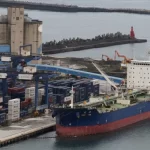
The Strait of Hormuz now lies at the centre of the new Great Game. Almost one-fifth of globally traded petroleum passes through this narrow waterway. It is not necessary to destroy oil fields to disrupt global energy markets. Repeated attacks on shipping, threats to close the Strait and rising insurance premiums are sufficient to undermine confidence in Gulf supplies. Modern energy markets depend not only on production but also on secure transport, finance and predictable delivery. Persistent instability therefore acts as an invisible tax on Middle Eastern oil.
The US occupies a fundamentally different position. Its oilfields, pipelines, LNG terminals and export ports lie thousands of kilometres from the battlefield. Every increase in uncertainty surrounding Gulf exports enhances the strategic value of American energy production. While the United States cannot immediately replace all Middle Eastern supplies, prolonged instability creates precisely the commercial incentives needed for massive expansion of American oil and LNG exports. The greatest strategic loser from such a transformation would not be Europe or even the Gulf states. It would be China.
China is uniquely vulnerable to prolonged instability in the Gulf. It is the world’s largest importer of crude oil, purchasing roughly 10–11 million barrels per day, much of it from the Middle East. The extraordinary expansion of Chinese manufacturing, petrochemicals, transport, and heavy industry has been built on abundant, relatively inexpensive imported energy. A prolonged disruption of Gulf supplies therefore directly constrains China’s economic growth. Higher oil prices will increase manufacturing costs, reduce export competitiveness and suppress China’s economic growth and accompanying military power.
The US stands in a very different position. It has become the world’s largest producer of oil and natural gas, with a vast network of pipelines, refineries, LNG terminals and export facilities located far from the Middle Eastern battlefield. Every period of uncertainty surrounding Gulf supplies increases international demand for American energy. Higher prices encourage new investment in drilling, pipelines, LNG plants and export terminals, further strengthening America’s position as a global energy supplier.
The pattern that has emerged during the past six weeks is therefore striking. Each time diplomacy appeared to offer a path towards de-escalation, renewed military action followed. Israel has continued operations against Hezbollah while maintaining an expanded military presence beyond its recognised borders. The US has resumed strikes against Iran after temporary pauses, while sanctions and pressure on Iranian oil exports have intensified. Iran has responded with attacks on American interests and shipping, further increasing instability in the Gulf.
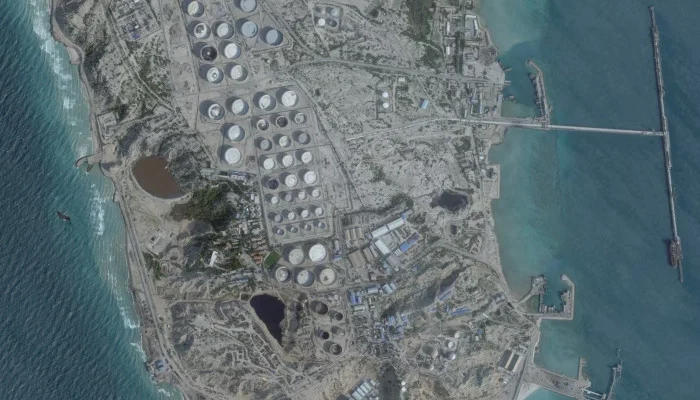
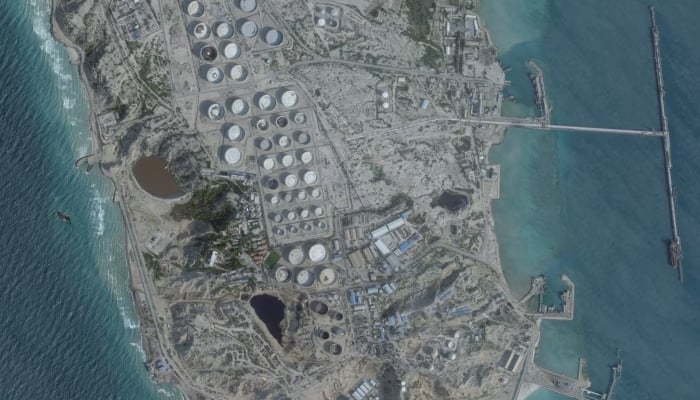
Whether this sequence reflects a consciously coordinated strategy or the cumulative dynamics of an escalating conflict cannot presently be established. Nevertheless, the strategic consequences are becoming increasingly evident. The events over the next few weeks will be very revealing about the future. Oil refineries could be attacked in Iran and the Gulf countries, which would shatter them economically. Destruction of water purification plants could be even more devastating as it could leave many Middle Eastern countries uninhabitable.
History shows that the true objectives of great powers are often understood only years after conflicts have ended. Wars frequently reshape financial systems, energy markets and geopolitical influence in ways that are not immediately obvious when military operations begin. The present conflict may prove no exception.
If prolonged instability ultimately encourages the world to rely increasingly upon American energy while reducing confidence in Middle Eastern suppliers, a profound transformation of the international economic order could follow. The traditional petrodollar would no longer derive its strength solely from oil being priced in dollars. Instead, it would increasingly be reinforced by the US becoming the world’s safest, largest and most dependable energy supplier. That is the essence of the ‘e-dollar’ concept.
The writer is a former federal minister, Unesco science laureate and founding chairperson of the Higher Education Commission (HEC). He can be reached at: [email protected]
Disclaimer: The viewpoints expressed in this piece are the writer’s own and don’t necessarily reflect Geo.tv’s editorial policy.
Originally published in The News
2026-07-23 09:22:00