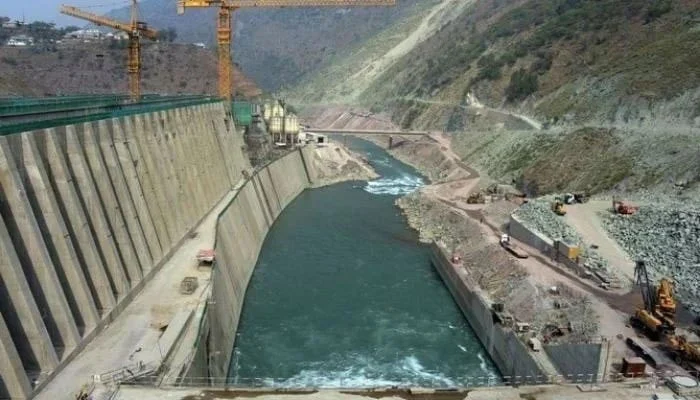
The Indus Waters Treaty (IWT) remained in force over the years – despite the wars of 1965, 1971 and Kargil. The treaty survived military mobilisations, diplomatic ruptures and suspended dialogue. That survival was not due to any goodwill but to the built-in safeguards that ensure the shared river system is used in accordance with pre-agreed rules, design limits, and third-party procedures.
The first safeguard is clarity of allocation. The eastern rivers went to India. The western rivers went to Pakistan. The second safeguard is institutional contact. The Permanent Indus Commission provided both sides with a channel for data, questions, inspections and objections, even when broader diplomacy was frozen. Another safeguard is technical discipline. India could build limited works on the western rivers, including run-of-river hydropower, ‘only’ within treaty rules on design, storage, pondage and operation.
Then there is a dispute settlement mechanism. Technical differences can go to a Neutral Expert. For legal disputes, there is the Court of Arbitration. The most important safeguard is Article XII. The treaty can be modified or terminated only through a duly ratified treaty between the two governments. There cannot be unilateral termination or modification of the treaty, nor unilateral suspension of Pakistan’s rights over the western rivers.
The above safeguards explain the gravity of India’s 2025 action, when it announced that the treaty is held in ‘abeyance’, a move with no legal standing. India knows very well that it cannot unilaterally terminate the treaty, so it has never formally ‘terminated’ it. What to talk of termination, the IWT doesn’t even give India the power to unilaterally pause it, which is why Pakistan rejects India’s announcement.
India’s action raises a treaty law question with consequences beyond South Asia. Can an upper riparian state pause a water treaty using a lame excuse? If that practice gains traction, every lower-riparian country faces greater insecurity. The IWT gives Pakistan a strong legal ground. Article III says Pakistan shall receive, for unrestricted use, the waters of the western rivers that India is obligated to let flow, subject only to defined exceptions, such as agriculture and hydropower, as set out in the treaty annexures. Except as provided in the treaty, India cannot store water or construct storage works on the western rivers.
Article XII is even clearer on India’s abeyance claim. The treaty may be modified only through a duly ratified treaty between the two governments. It continues in force until terminated by a duly ratified treaty between the two governments.
The broader law of treaties supports the same position. The Vienna Convention on the Law of Treaties codifies the rule that a treaty in force binds the parties and must be performed in good faith. It allows termination, withdrawal or suspension through the treaty’s own provisions (in this case Article XII) or with the consent of the parties. It also requires notice, reasons and a peaceful procedure when a state claims a ground for suspension and the other party objects.
Precedent also favours procedure over unilateral action. In the Gabcikovo-Nagymaros dispute on the Danube between Hungary and Slovakia, the International Court of Justice did not accept that one party (Hungary) could suspend and abandon treaty obligations by itself. In the Lake Lanoux arbitration between France and Spain, the tribunal required good-faith negotiation, technical guarantees and protection of treaty interests.
The same principle was applied under the Egypt-Sudan-Ethiopia Grand Ethiopian Renaissance Dam dispute, the Bangladesh-India Ganges/Farakka issue, and the China-Mekong basin case. There is no legal precedent for a state successfully placing a water treaty in abeyance by announcement. In all relevant precedents, courts protect treaty procedure, and diplomatic forums push parties back to negotiation.
The Court of Arbitration has already narrowed India’s room. In June 2025, it considered India’s abeyance move and held that the treaty does not permit unilateral abeyance or suspension. It also held that India’s unilateral action cannot suspend ongoing dispute settlement proceedings and that the court’s competence remains intact.
The treaty also assigns a limited, procedural role to the World Bank. The Bank helped broker the treaty and remains a signatory. It can facilitate treaty mechanisms, including the Neutral Expert and Court of Arbitration processes. Pakistan should ask the Bank to keep procedures alive, treat the treaty as continuing, and deny procedural legitimacy to unilateral abeyance.
Pakistan has a very strong legal case that it should fight at all relevant forums. On top of that, we have valid concerns about food security, hydropower, and biodiversity. It is true that in the short- to medium-term, India cannot hold Pakistan’s water. However, it is disrupting the flow of water and creating uncertainty.
Groundwater cannot rescue Pakistan from every surface water shock. Pakistan already extracts about 50 maf of groundwater annually. Many aquifers in Sindh are brackish, and extraction exceeds recharge in several parts of the Indus Basin. Disruption in irrigation water supplies at critical stages of crop growth is a serious food security threat.
Hydropower adds another channel of exposure to India’s water aggression. Wapda’s hydel stations generated 33.12 billion units in 2025, about 30 per cent of the system’s total generation, at Rs3.83 per unit. Flow uncertainty at the wrong time pushes the power system toward costlier generation, leading to higher tariffs, circular debt and pressure on foreign exchange reserves for imported fuel.
Then there is the Indus Delta. The delta needs freshwater, sediment and seasonal flows. Reduced flows weaken mangroves, fisheries, wetlands and coastal livelihoods. They also threaten the Indus river dolphin and other freshwater species.
To ward off these threats, Pakistan should adopt a multifaceted response. It should keep the Permanent Indus Commission channel alive. Even if India resists, Pakistan should continue to request meetings, inspections, data and technical clarifications. Each request and refusal should be entered into the evidence file. A complete record strengthens Pakistan’s legal and diplomatic position.
The Foreign Office, attorney general’s Office, Ministry of Water Resources, Pakistan Commissioner for Indus Waters, IRSA, Wapda, NDMA, Suparco and provincial irrigation departments should jointly prepare a quarterly Indus Water Dossier. The dossier should record Pakistan’s requests, project objections, real-time flows at headworks, reservoir operations, crop risks by command area, hydropower effects, groundwater stress and required releases below Kotri. That dossier should be sent to the World Bank, the UN secretary-general and key capitals.
The legal track should continue before the Court of Arbitration and the Neutral Expert, with a complete record of every missed communication, inspection denial, data gap and project design objection. The diplomatic track should frame India’s position as a threat to lower riparian states everywhere. The technical track should build independent capacity through telemetry, satellite monitoring, snowmelt modelling, reservoir tracking and real-time discharge audits.
Whereas the domestic response should be to use the available water optimally and prudently. We must reduce canal losses, regulate groundwater, improve watercourses, update crop zoning and protect environmental flows below Kotri. If we live in a world where might is right, we should not forget that knowledge and data are the new might. We should contest the IWT case with full might.
The writer heads SDPI, chairs the board of the National Disaster Risk Management Fund, and serves on the ADBI’s Advisory Board. He posts on LinkedIn @Abidsuleri
Disclaimer: The viewpoints expressed in this piece are the writer’s own and don’t necessarily reflect Geo.tv’s editorial policy.
2026-07-11 09:29:00