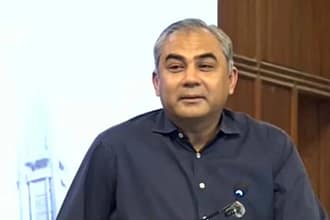



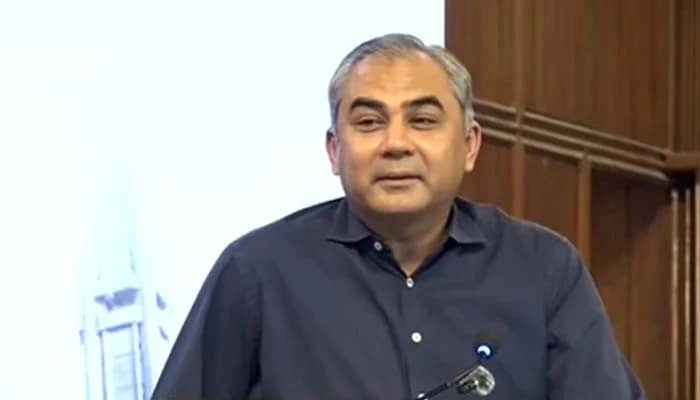

There is something deeply familiar about Mohsin Naqvi’s diagnosis of Pakistan’s governance crisis. Anyone who has spent decades watching governments come and go in this country has heard versions of the same lament before: the system is broken, institutions are weak, bureaucracy is cumbersome, politicians are short-sighted and structural reform is overdue.
I have heard these arguments in Islamabad conference rooms, in university discussions, in development-sector meetings and in conversations with ordinary citizens who simply want a school that works, a hospital that treats them and an office that does not make them return six times for one signature. Naqvi is right about one thing: Pakistan’s system of governance is not working. Where the interior minister goes wrong is in diagnosing why – and therefore in prescribing the cure.
Speaking at the Pakistan Economic Summit in Islamabad, Naqvi declared that the existing system had “collapsed” and suggested that Pakistan should move towards new administrative units or provinces. His frustration is understandable. Citizens travel absurd distances for services that should be available locally; files crawl through bureaucracies; businesses negotiate regulatory labyrinths; young people struggle to find jobs on merit; and governments borrow increasingly large sums merely to keep themselves functioning. But dividing four dysfunctional provincial administrations into eight, twelve or twenty dysfunctional provincial administrations would not constitute reform. It would reproduce the same dysfunction at greater expense. Pakistan does not suffer from too few provinces. It suffers from too little government where government matters most: in districts, towns, union councils and neighbourhoods. The distinction is important.
A citizen in Loralai, Tharparkar, Chitral or Rajanpur does not necessarily need another governor, chief minister, provincial assembly, secretariat and retinue of ministers. She needs a functioning hospital, school, road, water supply, police station, municipal service and district administration. Creating another provincial capital will not automatically provide any of these. Indeed, Pakistan has already conducted half the experiment. The 18th Amendment and the seventh National Finance Commission Award transferred substantial responsibilities and resources from Islamabad to the provinces. Yet devolution largely stopped there.
A World Bank report published this month makes the problem strikingly clear: local governments accounted for around 10% of total government spending in 2005, but less than 5.0% by 2024. Provincial spending increased substantially after the 2010 reforms, but much of it was swallowed by recurrent administrative expenditure rather than transformed into better schools and health services. Pakistan therefore devolved power from Islamabad to Lahore, Karachi, Peshawar and Quetta – and then hesitated to send it further. That is the unfinished revolution. Article 140A of the constitution requires provinces to establish local governments and devolve political, administrative and financial authority to elected local representatives. Yet local government has repeatedly remained Pakistan’s neglected third tier. Provincial politicians often demand autonomy from Islamabad while proving remarkably reluctant to grant comparable autonomy to districts and municipalities.
The answer is not another layer of political geography. It is to make the third tier real. Give elected district and municipal governments predictable fiscal transfers, clearly defined functions, professional administrations and authority over local roads, sanitation, water, primary services and community infrastructure. Strengthen district health and education management. Give local representatives revenue-raising responsibilities as well as spending powers. Publish district budgets and performance indicators so citizens can see what their councils collect, spend and deliver.
That would bring government closer to people far more effectively than drawing another boundary on a map. There is another danger in the new-provinces prescription. Pakistan is not an ethnically neutral federation. Provincial boundaries are intertwined with language, identity, history, resources and political representation. The moment a new province is proposed, questions multiply. Should it be created on administrative, linguistic, ethnic, historical or economic grounds? Where should its capital be? Which districts belong in it? Who controls its water, minerals and jobs? How are National Assembly and Senate seats redistributed? How does it affect the NFC Award?
A reform supposedly designed to simplify administration can quickly become an argument over identity. Hazara may demand one province, southern Punjab another. Other regions could advance equally passionate claims. Sindh’s urban-rural divide could become constitutional politics. Balochistan’s already sensitive questions of resources, demography and representation could acquire new territorial dimensions. Pakistan, with its history of ethnic grievances, should be wary of opening several boundary disputes simultaneously unless there is overwhelming democratic consensus.
The interior minister is also right to complain about excessive centralisation. But again, his diagnosis points towards a different remedy from the one he proposes. Why does a routine file need to travel through multiple desks in Islamabad? Abolish unnecessary desks. Why does a business require approvals from numerous agencies? Eliminate permissions that serve no demonstrable public purpose. Why does the prime minister have to intervene in matters that should be settled by a secretary, provincial department, district authority or municipal officer? Delegate authority. Pakistan does not need to create new bureaucracies to escape bureaucracy. Its fiscal condition makes this particularly urgent. Debt servicing has become the dominant federal burden. Pensions, subsidies, administrative expenditure and losses of state-owned enterprises consume resources that might otherwise finance development.
The World Bank’s latest fiscal-federalism assessment identifies an especially revealing problem: after greater resources and responsibilities were transferred to provinces in 2010, federal expenditure did not fall commensurately. Pakistan decentralised functions without sufficiently shrinking the centre. That is precisely backwards. If education, health, agriculture and other responsibilities have moved downwards, federal ministries and attached structures should be reviewed accordingly. Every ministry, division, authority, board and state-owned company should have to justify its existence. Duplication between federal and provincial governments should be removed. Loss-making enterprises should be restructured, privatised where appropriate, or closed rather than maintained indefinitely by taxpayers.
Before Pakistan creates another chief minister’s secretariat, it might first ask how many secretariats it can afford. I am reminded here of the countless discussions I have had over the years with teachers, civil servants, journalists and development practitioners in different parts of Pakistan. Their complaints have rarely been about the absence of a new province. They complain about a district hospital without medicines, a school without teachers, a road that remains broken for years, a municipal office without authority, or a local official who cannot take a decision because the file must travel upward.
The problem, as experienced by citizens, is not the size of the province. It is the distance between responsibility and authority. Nor should governance be judged by monuments, gated developments and grand projects. The test of a state is what happens to an ordinary citizen when something goes terribly wrong. The continuing horror of coal mining provides such a test. The latest disaster in Balochistan’s Sorange area has reportedly killed dozens of miners. Workers descend into dangerous mines to earn livelihoods under conditions that repeatedly produce fatal accidents. When miners are trapped underground, the state often lacks the regulatory enforcement, emergency capacity and rescue infrastructure expected of a modern government.
What good is an additional province to a miner breathing methane underground? Pakistan needs trained rescue teams, properly equipped district emergency services, rigorous mine inspections, enforceable occupational safety laws and compensation systems that protect workers’ families. Such capabilities have to exist locally, before disaster strikes. The same principle applies to housing. Building more elite enclaves and Housing Authorities is not a substitute for housing policy. A country facing enormous shortages of affordable housing should concentrate public policy on serviced land, low-cost housing, transport, water, sanitation and secure tenure for ordinary families.
Development should be measured by how many citizens obtain decent living conditions, not by how many gated communities acquire landscaped avenues. Naqvi also praised Prime Minister Shehbaz Sharif’s and the field marshal’s long working hours, while suggesting that even an 18-hour day would amount to firefighting without structural reform. On this, too, there is a useful insight hidden inside a questionable political framing. Countries are not transformed by the stamina of one individual. Good systems should work when the prime minister or the field marshal is asleep.
The writer is dean of the faculty of liberal arts at a private university in Karachi. He tweets/posts @NaazirMahmood and can be reached at: [email protected]
Disclaimer: The viewpoints expressed in this piece are the writer’s own and don’t necessarily reflect Geo.tv’s editorial policy.
Originally published in The News
2026-08-02 10:17:00