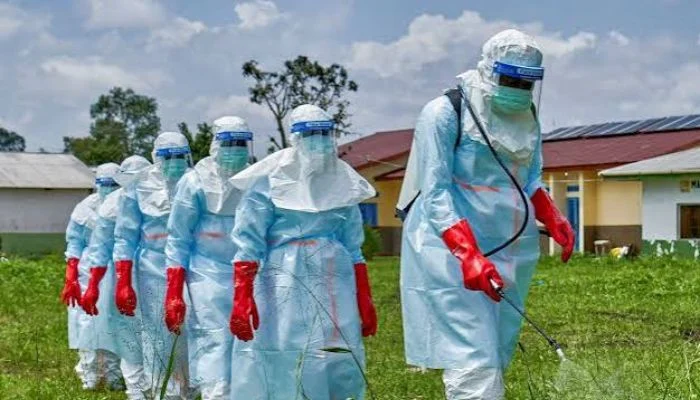

The fastest-growing Ebola outbreak in history has taken more than 2,000 lives in the Democratic Republic of Congo, as confirmed by government data published Tuesday, August 11.
Health officials warn the crisis is rapidly outpacing containment efforts.
There are a total of 4,831 confirmed cases of the deadly outbreak across five eastern provinces. Within the last three weeks, the death toll has doubled, reaching 1,000 fatalities. World Health Organisation (WHO) Director-General Tedros Adhanom Ghebreyesus told reporters: “It has a big head start, still way ahead of us, and we’re playing catch-up.”
In contrast to previous Ebola crises, this outbreak involves a rare Bundibugyo strain which doesn’t have any approved vaccine so far. This virus is genetically different from the Zaire virus that swept through West Africa, hence making existing treatments ineffective against the new one.
Furthermore, the outbreak is spreading in an area which is characterised by wars, poor infrastructure, and lots of false information. The health workers in the province of Ituri, which is at the centre of this outbreak, have even staged a strike due to lack of salary payments.
Despite the increasing death toll in Africa, health officials stress that robust U.S. public health systems make domestic transmission highly unlikely, as Ebola is not airborne. It doesn’t travel through coughing, sneezing or breathing the same air. Instead, transmission is only possible when in contact with the body fluids directly.
2026-08-13 00:02:00