


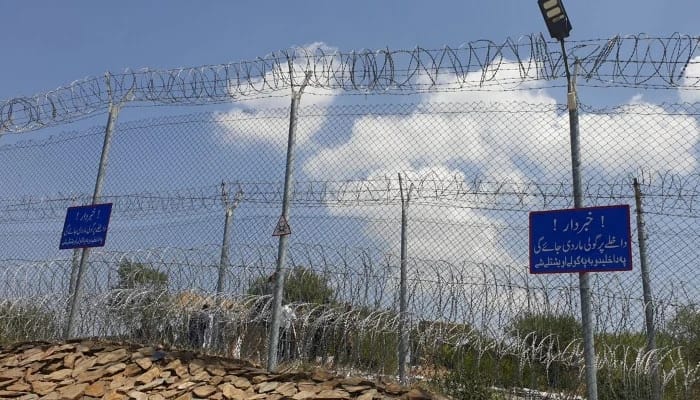
Five years after the Afghan Taliban returned to Kabul, Pakistan is confronting a sharper question than it expected in August 2021: how did a government Pakistan helped engage diplomatically become linked to the gravest security challenge facing the country today?
The frequency and sophistication of terrorist attacks in Khyber Pakhtunkhwa and Balochistan have reached alarming proportions. Soldiers, policemen, tribal elders and civilians continue to lose their lives in a conflict that appears to have no end in sight. The key issue is no longer whether Pakistan faces a security crisis. It is whether this violence reflects Afghan Taliban hostility alone or a broader geopolitical contest in which Pakistan has become the principal target.
The ongoing terrorist activities emanating from Afghan soil deserve careful scrutiny by policymakers, especially when proxy warfare has long shaped regional politics. Afghanistan itself became the arena of competing foreign interests during the Cold War, after 9/11, and even after the withdrawal of Nato forces. It would therefore be naive to assume that external actors have suddenly abandoned the use of non-state proxies to pursue strategic objectives.
Pakistan’s predicament is unique among Afghanistan’s neighbours. Afghanistan shares borders with Iran, China, Tajikistan, Uzbekistan and Turkmenistan. While these countries have legitimate security concerns, none experiences the level of sustained cross-border militant violence that Pakistan confronts almost daily. This reality alone should compel a serious strategic assessment.
The UN has repeatedly documented the continued presence of several terrorist organisations in Afghanistan, including TTP, Al-Qaeda, IMU and ETIM. The BLA is yet another menace haunting Balochistan that enjoys sanctuaries in Afghanistan and financial assistance from India. The central question is whether the Taliban possess the willingness and capability to neutralise them.
The Afghan Taliban have consistently denied allowing Afghan territory to be used against neighbouring countries. Even so, the persistence of attacks inside Pakistan from Afghan soil has created an undeniable credibility gap. Diplomatic assurances cannot substitute for measurable action. This contradiction raises a more fundamental question about the character of the Taliban regime and its adherence to international norms and obligations. And its relationship with multiple militant factions remains a source of concern.
Governments derive legitimacy from their ability to monopolise the use of force. Militia movements derive influence from their ability to accommodate competing armed groups. The distinction is crucial because the Taliban cannot simultaneously claim the privileges of sovereignty while disclaiming responsibility for the actions of organisations operating within territory under their control.
Equally intriguing is the international community’s approach towards Kabul. Despite withholding formal diplomatic recognition, Western governments continue to finance large-scale humanitarian assistance for Afghanistan mainly through UN agencies and international organisations. Media reports have frequently referred to approximately $40 million in humanitarian cash assistance entering Afghanistan each week. The stated objective is entirely understandable: preventing humanitarian collapse and widespread famine among ordinary Afghans.
Yet this arrangement raises legitimate policy questions. Can billions of dollars enter an economy under Taliban control without directly or indirectly strengthening the governing authorities? If the international community insists that humanitarian aid bypasses the Taliban, independent mechanisms should continue to demonstrate that these funds are reaching intended beneficiaries while minimising opportunities for diversion or political capture. None of this is visible as poverty in the country increases by the day. A transparent system would be required to sustain donors’ confidence and address the needs of the Afghan people.
Pakistan’s concerns become compounded when viewed through a broader geopolitical lens. The country is simultaneously facing challenges emanating from terrorism in the west, persistent tensions with India in the east, economic pressures at home, and increasing strategic competition among major powers. Therefore, a prolonged insurgency in Khyber Pakhtunkhwa and Balochistan is not only detrimental to Pakistan’s security but also weakens its economy, discourages foreign investment, complicates regional connectivity projects, and diverts resources from development to security.
Whether these outcomes are the unintended consequences of Afghan instability or the desired objectives of hostile external actors remains a matter requiring continued investigation. Policymakers cannot ignore the strategic reality that instability in Pakistan serves the interests of those who oppose regional connectivity, economic integration, and strategic autonomy. Therefore, being a victim of terrorism, Pakistan would be justified in placing the responsibility on the perpetrators. The Taliban regime has so far tried to obfuscate the issue. A multi-pronged approach would be needed for effective counterterrorism measures.
First, diplomatically, engagement with Kabul must continue, but it should increasingly be measured by verifiable outcomes rather than rhetorical assurances. Counterterrorism cooperation should be linked to demonstrable action against all terrorist organisations without distinction.
Second, regionally, Pakistan should deepen security coordination with China, Iran, Russia, the Central Asian republics and other neighbouring states that share concerns about transnational extremism. Third, domestically, Pakistan must strengthen governance in the merged districts of Khyber Pakhtunkhwa and address the long-standing socio-economic grievances of Balochistan. Security operations alone cannot produce lasting peace unless accompanied by economic opportunity, political inclusion and effective administration.
Finally, Pakistan should intensify efforts to expose evidence of cross-border terrorism through international institutions, particularly the UN. The debate should move beyond competing narratives towards verifiable facts supported by intelligence sharing and multilateral cooperation.
Ultimately, the central issue is not whether the Afghan Taliban consider Pakistan a friend. International relations are shaped less by sentiment than by interests. The real test is whether the Taliban are prepared to act as a responsible government by ensuring that Afghan territory is not used to threaten neighbouring states. Their answer will determine not only Afghanistan’s quest for international legitimacy but also the future stability of South and Central Asia and beyond.
Pakistan has invested heavily in the hope that peace in Afghanistan would translate into peace along its western frontier. The time has come for measurable commitments, transparent cooperation and genuine regional responsibility. Only then can Pakistan and Afghanistan end the repeated cycle of violence and build the peaceful neighbourhood their people deserve.
The writer is a former ambassador of Pakistan to Iran and the UAE. He is also a former special representative of Pakistan for Afghanistan and currently serves as a senior research fellow at the Islamabad Policy Research Institute (IPRI).
Disclaimer: The viewpoints expressed in this piece are the writer’s own and don’t necessarily reflect Geo.tv’s editorial policy.
Originally published in The News
2026-07-27 09:50:00