
The National Aeronautics and Space Administration’S (NASA) ambitious rescue attempt to save an aging space telescope from falling back into Earth’s atmosphere by sending a robot spacecraft into space has failed.
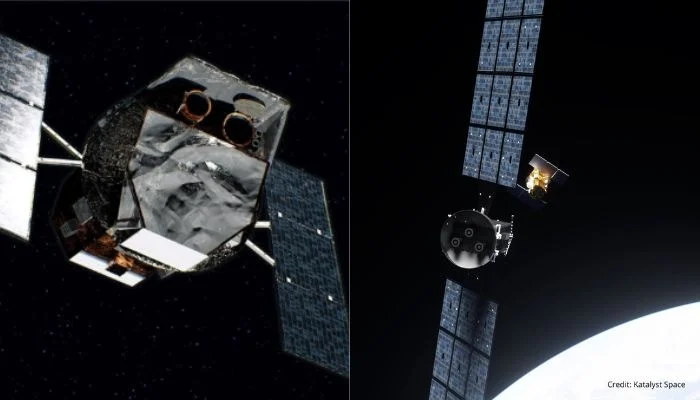
The spacecraft sent to rescue the Neil Gehrels Swift Observatory, a NASA space telescope in service since 2004, developed serious technical problems in orbit.
Despite the best efforts by NASA and Arizona-based Katalyst Space Technologies: the company behind the rescue spacecraft known as LINK, it kept spiralling out-of-control forcing the American space agency to abandon the rescue attempt.
NASA revealed that LINK faced an altitude-control issue, making it impossible to safely carry out the planned rescue.
NASA’s aging observatory is currently orbiting around 347 kilometres above Earth, but its orbit has been gradually shrinking because of atmospheric drag. Increased solar activity has accelerated that process.
NASA and Space Technologies had planned an ambitious first-of-its-kind operation in which LINK would approach Swift, grab the telescope and push it into a higher orbit of around 600 kilometres.
The move was expected to extend Swift’s operational life by several years.
The rescue mission cost NASA around $30 million and was developed at extraordinary speed, with Katalyst building LINK in roughly nine months.
The spacecraft began spinning after suffering problems with its attitude-control system. Preliminary reports suggest that LINK had reaction-wheel failures and problems with its propulsion system, which contributed to the difficulty.
Despite the best efforts by the engineers, it was decided by NASA and the Katalyst that the out-of-control rescue bot was too risky to attempt and safely capture Swift.
Without the rescue, Swift is expected to continue losing altitude until it eventually re-enters Earth’s atmosphere and burns up.
The observatory is worth roughly $500 million and has operated for more than two decades, far exceeding its original mission expectations.
2026-08-20 18:57:00