
More than 150 years after Charles Darwin first suspected that certain plants in the Saxifraga genus are carnivorous.
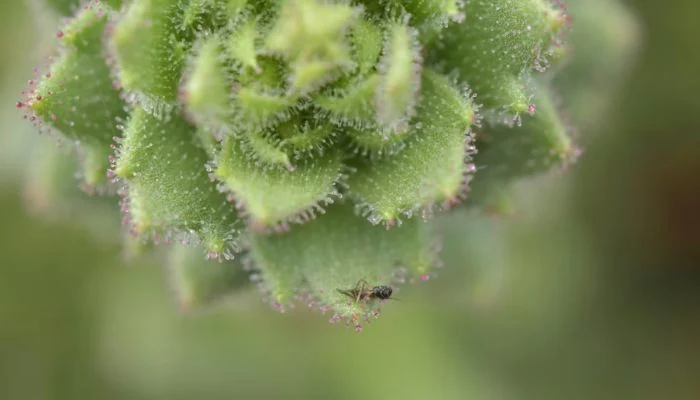
In research published Tuesday, August 4, in Nature Communications, researchers confirmed that Saxifraga candelabrum, a flowering alpine plant native to the Qinghai-Tibet Plateau and Hengduan Mountains in China, actively lures, traps, and digests insects for nutrients.
It was also Darwin who first thought in 1875 that two European species of Saxifraga could be carnivorous plants due to sticky glandular hairs on them that were similar to those of already known carnivores such as sundews; however, his experiment failed to prove it scientifically.
“The guess of Darwin is true,” noted Hang Sun, research professor at Kunming Institute of Botany at the Chinese Academy of Sciences and senior author of the study. “This highlights the keen sense of science he had.”
The researchers found that mature S. candelabrum plants caught around 70 small insects stuck to their reddish sticky hairs. The chemical analysis confirmed that the plant attracts prey using floral scents with compounds known to lure insects, traps only small gnats while sparing larger pollinating flies, and digests captured insects using the enzyme phosphatase.
S. candelabrum is the first proven meat-eater within the Saxifragaceae family. Scientists also discovered that there were common genes among this plant and other meat-eating plants, implying that eating meat might be more common among flowering plants than had been previously thought.
With nearly 750 different meat-eating plant species that have been found within 14 families, this plant adds one more to the list and confirms another one of Darwin’s amazing predictions.
2026-08-04 23:48:00