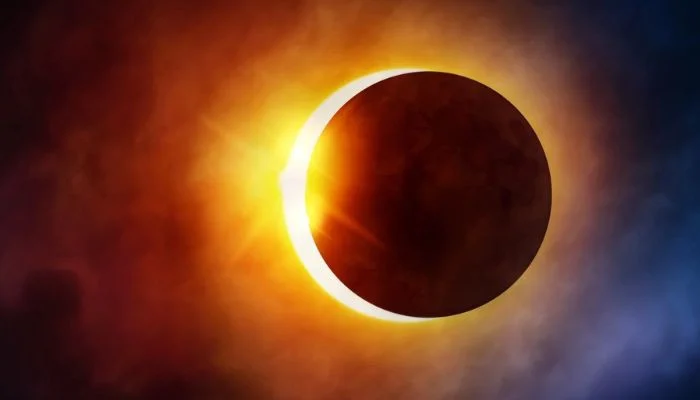

August is going to be a significant month for skygazers, featuring a total solar eclipse, the peak of the Perseid meteor shower, and a total solar eclipse.
The total solar eclipse will sweep across eastern Greenland, western Iceland, and northern Spain.
Outside the narrow path of totality, a deep partial eclipse will be visible across much of Europe, while northeastern North America, including 26 U.S. states, will see the total eclipse during the afternoon.
Solar eclipse glasses are a must-have for safe observations. Only a few hours after the solar eclipse, the Perseid meteor shower reaches its peak on the night between August 12 and 13. Since the new moon happens almost simultaneously, the skies will be very dark, enabling us to observe 80 to 100 meteors an hour, as well as fireballs at times. In this way, 2026 turns out to be a great year for observing the shower.
Adding to the excitement, August 15 will see Venus reaching its greatest eastern elongation, shining brilliantly as the “evening star” in the western sky after sunset.
The celestial events conclude on August 27-28 with a deep partial lunar eclipse, during which 96% of the full “Sturgeon” Moon will enter Earth’s shadow.
The greatest show in North and South America will take place at night, whereas in Europe, the eclipse will be visible before sunrise. The month of August will also see the return of the auroras in the Arctic region, where there can be a chance of witnessing auroras in Alaska, Canada, and Scandinavia.
2026-08-01 19:58:00