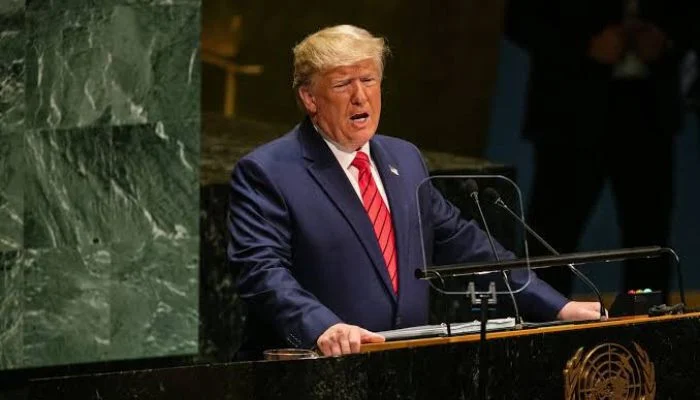
President Donald Trump’s approval ratings have dipped below 30 per cent for the first time in his political career, after an American Research Group poll showed that the former reality TV star currently enjoys the support of just 29 per cent of those surveyed—historically bad numbers less than two months prior to the November 3 midterm elections.
According to the latest poll carried out between September 16-20 among 1,100 American adults, only 26 per cent see the economy in positive terms, whereas 72 per cent see it getting worse.
The results echo other polls, including the Reuters/Ipsos poll, which shows Trump scoring 32 per cent, or Civiqs National Tracking Poll, where 35 per cent approve of the incumbent versus 59 per cent who disapprove, giving him a net negative rating of -24 points.
The reason behind Trump’s collapsing numbers is mainly the war with Iran, which has been the single largest source of Republican outrage. A CBS News/YouGov poll found that 66 per cent of likely voters found the war to be very important in deciding their congressional candidate, and 71 per cent of Americans are not willing to pay higher prices for fuel because of it.
In July, Representatives Thomas Massie (KY), Brian Fitzpatrick (PA), Tom Barrett (MI), and Warren Davidson (OH) voted for a House resolution that called for Congressional authorisation for military intervention in Iran. However, by September, Iowa Representatives Mariannette Miller-Meeks and Zach Nunn were on board with a similar move that was adopted 220-204.
Defections are not limited to the war either. Analysis conducted by Newsweek based on Civiqs’ data demonstrates Trump’s low approval rating in eight of nine states where Republicans are challenging his policies. The worst rating is Trump’s in Maine, where he receives 31 per cent positive responses and 63 per cent negative. Michigan gives him 36 per cent support compared to 58 per cent opposition, and Pennsylvania’s rating is almost the same: 36-57.
His most significant net decline occurred in Kentucky, falling from +23 to -10. Florida’s gubernatorial candidate Byron Donalds stripped down many of Trump’s mentions from his campaign website, and Maria Elvira Salazar even denounced the administration’s immigration policies in her campaign commercial.
Adding to the woes of the president is economic fear. The Federal Reserve increased interest rates in September for the first time since 2023, based on inflation. The increase is seen as an assertion by the Fed that it is independent from the demands of the president. According to a Fox News poll, more than two-thirds of voters—and one-quarter of Republicans—feel that Trump made the economy worse.
Voters trust the Democrats over the Republicans on inflation issues by 15 points. This is because of dissatisfaction with Republican inaction (51 per cent) rather than trust in the Democratic approach (47 per cent).
Since both the 435 seats of the House of Representatives and about one-third of the Senate will be contested in November elections, the figures above indicate hard times ahead for Republicans. The White House is not taking this polling seriously, with spokesman Davis Ingle stating that Trump’s win in 2024 is the best poll and will bear fruit.
2026-09-24 00:20:00