After decades of cooperation, and more than a decade of CPEC, Pakistan should ask a question that is uncomfortable precisely because it is so obvious: why have we absorbed so much Chinese capital, infrastructure and technical assistance, but so little of the institutional discipline that made China’s own development possible?
This is not an argument that Pakistan should ‘copy China’. It is an argument that we have concentrated on importing Chinese outputs roads, power plants, equipment and financing while paying remarkably little attention to the administrative systems that allowed China to coordinate land, cities, infrastructure, finance, industry and local government at scale.
The distinction is increasingly important because CPEC itself is moving into a different phase. CPEC records say China has materialised around $27 billion in investment across CPEC projects, while the current CPEC framework is being repositioned around growth, innovation, green development, livelihoods and regional connectivity. The 2025-29 CPEC action plan is explicitly intended to deepen cooperation beyond the original infrastructure-heavy phase. At the 88th CPEC Progress Review, participants noted that if CPEC 2.0 remains principally a pipeline of projects, Pakistan will have missed the most valuable part of the Chinese experience.
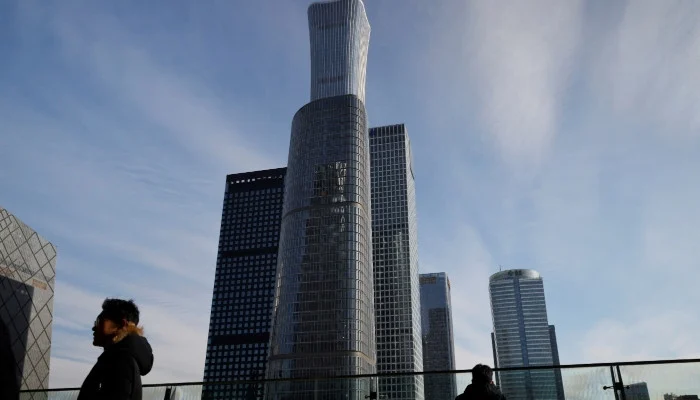
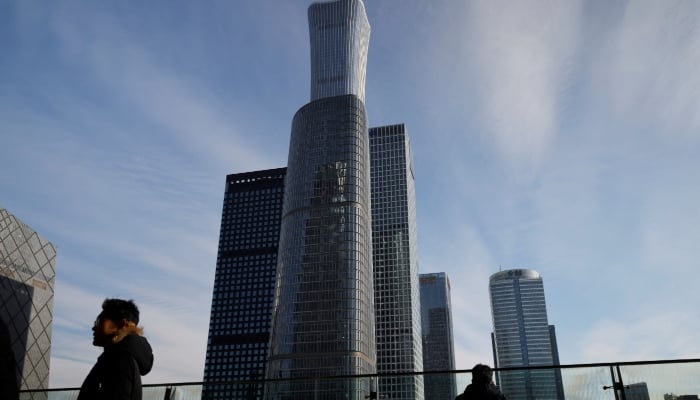
Evidence from China today makes the contrast hard to ignore. By the end of 2025, China’s permanent urban population had reached 953.8 million and its urbanisation rate had risen to 67.89%. China also added 12.67 million urban jobs during 2025, while its high-tech manufacturing value added increased by 9.4%. These numbers do not prove that every aspect of Chinese development is desirable or transferable; they show something Pakistan has consistently underestimated: development at scale requires an administrative state capable of continuously adjusting institutions as the economy changes.
The 2023 census officially puts Pakistan’s urban population at roughly 39%, but a World Bank study released in October 2025 argues that conventional administrative definitions significantly understate the extent of urbanisation. Using satellite imagery and the internationally comparable Degree of Urbanisation methodology, the study revisits what actually constitutes a town or city in Pakistan. If settlements that function economically as urban areas are classified administratively as rural, government planning underestimates demand for roads, water, sanitation, housing, public transport, schools and employment. Pakistan may therefore be more urban than its official statistics suggest, while being institutionally far less prepared for urbanisation than its statistics imply.
The consequences are visible in almost every major city. Pakistan continues to manage metropolitan economies through overlapping jurisdictions, development authorities, municipal bodies, cantonments, provincial departments and specialised agencies. The Asian Development Bank’s current mapping of Pakistan’s local-government landscape identifies 129 district councils and 619 urban councils, alongside metropolitan corporations, municipal corporations, committees and other local structures. Revenue-raising powers vary substantially according to provincial legislation.
In Karachi, the World Bank has previously identified fragmented city management and weak coordination among institutions as fundamental obstacles to planning and investment. The problem is therefore not simply that Pakistani planners are using outdated maps. The deeper problem is that the institution responsible for planning the economic city often does not coincide with the geography of the economic city.
This is where China’s experience becomes useful not as a template, but as a source of institutional lessons. China’s urban-development thinking has moved considerably beyond the simplistic proposition that urbanisation. Its current development strategy emphasises coordinated regional development, urban-rural integration, green transition, infrastructure connectivity and higher-quality urbanisation. The latest Chinese data show that regional economic strategies such as the Yangtze River Economic Belt, Yangtze River Delta and Beijing-Tianjin-Hebei cluster remain central to national development planning. The underlying lesson is straightforward: cities are economic systems, not merely administrative territories.
Pakistan still tends to treat urban development as a construction exercise. A flyover is approved, a road is widened, a housing scheme is notified, a mass-transit corridor is built and a drainage project appears after the flooding. What is usually missing is the metropolitan economic model behind these investments. Where will employment be concentrated? How will workers commute? What land uses should surround transport nodes? Who will finance maintenance twenty years from now? How will land values change when public infrastructure arrives? Which institution is accountable when the road, sewerage system and housing expansion cross different administrative boundaries? These questions are more important than the ribbon-cutting ceremony.
The World Bank’s recent assessment of Pakistan’s secondary cities makes precisely this point. Its 2024 report concluded that Pakistan is on an “unfavourable urban trajectory”, with poorly planned city growth and significant shortcomings in housing and service delivery. The response is shifting from diagnosis to institutional investment. In December 2025, the World Bank approved a $400 million Punjab Inclusive Cities Program, targeting 16 secondary cities.
Importantly, the programme is not limited to physical infrastructure: it aims to improve the institutional and financial performance of local urban administrations, strengthen revenue generation, improve water and sanitation networks, drainage and waste management, and benefit approximately 4.5 million people through improved water, sanitation and hygiene services. That is much closer to the type of development cooperation Pakistan should seek from China.
There is an important political economy behind our failure. Governments prefer projects because projects are visible, attributable and politically marketable. Institutional reform is different. Reforming municipal taxation, rationalising land records, establishing metropolitan authorities, integrating databases or enforcing zoning regulations creates winners and losers. It can challenge powerful landowners, developers, provincial bureaucracies and local political networks. It rarely produces an inauguration ceremony. Consequently, Pakistan has repeatedly invested in the hardware of development while underinvesting in its operating system.
Pakistan is not bound to reproduce China’s centralised political system. It should adapt administrative techniques, data-driven planning, performance management, integrated infrastructure planning, land-value management and institutional accountability within Pakistan’s own constitutional framework.
In 2026, China and Pakistan are discussing the next generation of CPEC cooperation, while the CPEC Secretariat has increasingly highlighted industrialisation, agriculture, technology, livelihoods and regional connectivity. Pakistan should add a seventh dimension to this agenda: institutional learning. Instead of sending delegations to China merely to observe factories and infrastructure, Pakistani ministries and local governments should establish long-term partnerships with Chinese municipalities, planning commissions, urban-development institutions and universities.
Pakistani planners should study how Chinese cities coordinate transport and land use; how local governments use digital platforms and performance indicators; how industrial clusters connect to logistics; how infrastructure investment links to regional economic strategies; and how public administration is evaluated against measurable outcomes.
This would also require Pakistan to redefine ‘technical assistance’. Sending officials abroad is not knowledge transfer if they return to the same fragmented system with no authority, data or budget to implement what they learned. Genuine cooperation would mean embedded technical teams, joint pilot projects, interoperable urban data systems, city-level performance indicators, professional municipal cadres and multi-year institutional partnerships whose success is measured by improvements in service delivery and productivity rather than by the number of meetings held.
Pakistan therefore does not need a Chinese development model. It needs something more practical: Chinese development discipline translated into Pakistani institutions. The irony of the past decade is that we have been close enough to China to borrow its capital, engineers and machinery, but not close enough to learn how it organises the state around long-term development objectives.
The next phase of CPEC should correct that imbalance. Pakistan’s greatest development deficit is no longer simply a shortage of roads, electricity or physical infrastructure. It is the inability of institutions to coordinate the infrastructure, land, people, finance and economic activity already around them. China can continue to provide capital and technology, but the more consequential transfer would be administrative: how to plan beyond one project, one government and one budget cycle.
The writer is a trade facilitation expert, working with the federal government of Pakistan.
Disclaimer: The viewpoints expressed in this piece are the writer’s own and don’t necessarily reflect Geo.tv’s editorial policy.
Originally published in The News
2026-09-28 08:44:00