- DPM Dar directs ministries to expedite export formalities.
- Pakistan holds over 2.6 million tonnes of sugar stocks.
- PSMA chief says association excluded from key consultation.
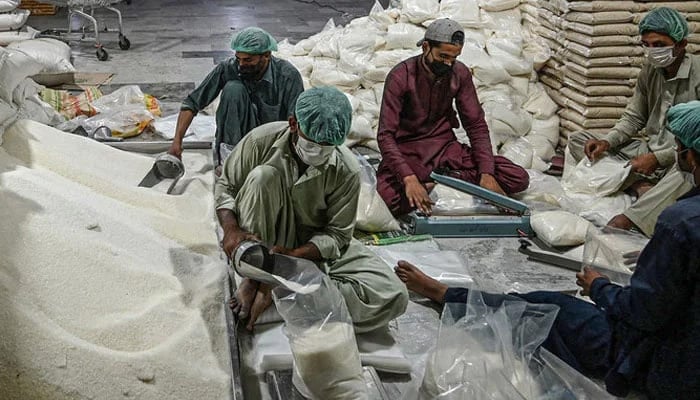
LAHORE: The federal government on Tuesday advanced its sugar export plan, with Deputy Prime Minister and Foreign Minister Ishaq Dar finalising modalities for the export of 200,000 tonnes.
A meeting of the Cabinet Committee for the Export of Surplus Sugar finalised modalities for 0.2 million tonnes of sugar export and approved a monitoring committee for keeping regular check on sugar prices, The News reported.
Dar directed all concerned ministries to expedite the process and complete pending formalities immediately in order to support the sugar industry, sugarcane farmers and boost foreign exchange earnings while protecting domestic consumers.
The meeting was attended by ministers for national food security, climate change, SAPM Tariq Bajwa, secretaries of commerce, national food security and research and other relevant stakeholders from federal and provincial departments.
The move comes at a time when Pakistan is heading into the 2026-27 crushing season with a crisis of plenty.
Commenting on the development after the meeting, a sugar sector insider told The News that as of August 31, 2026, the country was sitting on stocks of over 2.6 million tonnes. Even after meeting domestic demand of around 1.4 million tonnes until November 15, Pakistan will still carry a surplus of approximately 1.25 million tonnes into the new season. On top of that, sugar output for the next season is projected at over 8 to 8.5 million tonnes.
Against this backdrop, the government’s approval of only 0.2 million tonnes for export is being seen as negligible and an inadequate response to an impending crisis, he added.
The industry has termed this quota insufficient and is seeking permission for at least 1 million tonnes for immediate export.
The insider warned that if timely exports were not allowed, mills will be forced to delay crushing due to lack of storage and liquidity, which will inevitably lead to a crash in sugarcane prices.
“This would be disastrous for the farmer, who is already a victim of depressed wheat prices and cannot afford a second consecutive blow to his major cash crop.”
He said the government must act swiftly and proactively to allow substantial exports without delay and ensure that the benefits reach the growers; otherwise, next year will be the worst ever for sugarcane growers in particular and for agriculture in general.
Echoing the concern, a veteran sugar miller said the news of 0.2 million tonnes export had been repeated so many times that it feels as if permission for two million tonnes had been given. He questioned what benefit sugar exports will bring now when mills had already suffered heavy financial losses.
The millers argue that delayed and small export quotas fail to solve the core problem of surplus stocks and cash flow. With warehouses full, mills are unable to pay farmers on time and cannot prepare for the new crushing season.
The government, on the other hand, is trying to balance two objectives — supporting the industry and farmers through exports and protecting domestic consumers from price hikes through a monitoring committee.
Stakeholders say the coming weeks will be critical. According to them, if a larger export quota is not allowed before mid-November, the surplus will spill over into the new season, creating a glut that could depress ex-mill prices, delay cane payments and hurt both industry and growers.
Meanwhile, Pakistan Sugar Mills Association (PSMA) Chairman Chaudhry Zaka Ashraf said that the association — the major stakeholder — was not invited to the important consultation. He also pointed out that beet sugar was not being included in the export plan, despite being part of the overall surplus stock.
2026-09-30 10:42:00