



The world is witnessing a US-China competition in almost every sphere of life–economy, military, technology, trade, critical minerals, AI, semiconductors, space, cybersecurity, infrastructure, education, science, diplomacy and reach to the Global South.
While China has made significant progress in all these areas, its reach to the Global South and diplomatic stature has significantly increased in recent years. Like a noticeable decline in other areas, the US has substantially lost its ‘soft power’ reserves. But first, what is soft power?
According to American political scientist Joseph Nye, soft power is the capacity to influence external behaviour by persuasion rather than coercion. Separating itself from hard power – which acts forcefully through military might, economic prowess, or political influence – soft power is structured by a sense of understanding and proximity that is generated in the sharing of ideas, ideologies, and good relations. In his 2004 book, ‘Soft Power: The Means to Success in World Politics’, he defines soft power as “the ability to get what you want through attraction rather than coercion or payments. It arises from the attractiveness of a country’s culture, political ideals, and policies”.
For the first time in nearly two decades, a new Pew Research Survey, released last month – based on interviews with more than 42,000 people across 36 countries – shows China is viewed more favourably than the US in most nations surveyed. This represents a major reversal from the pattern that prevailed throughout most of the past two decades. Due to its peaceful rise and non-interference in other countries, China’s global image has significantly improved. Across 37 countries, a median of 51% holds a favourable view of China, while 39 percept holds an unfavourable view. This is a marked improvement compared with recent years, when unfavourable views generally outweighed favourable ones.
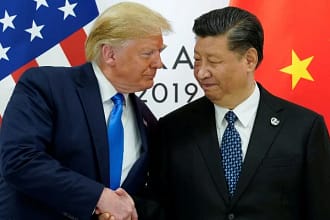
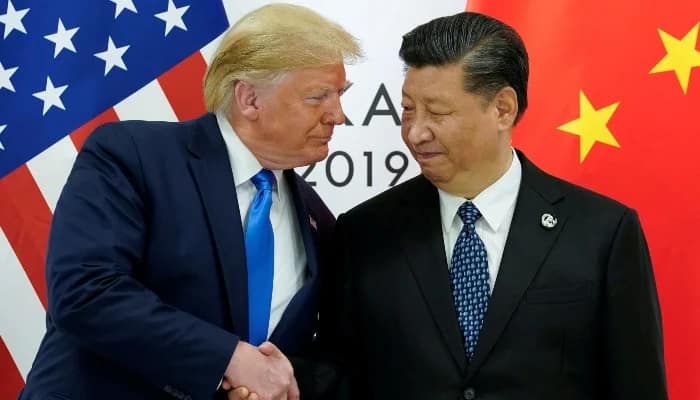
The US’s image has declined, caused by both improving perceptions of China, and declining perceptions of the US due to its domestic politics as well as how it conducts its foreign policy. In addition, Chinese President Xi Jinping is viewed more positively than US President Donald Trump, in 22 of the 36 countries surveyed, respondents expressed greater confidence in Jinping than in Trump regarding world affairs. Of all the countries surveyed, the US is viewed more favourably than China in only six countries, including: India, Japan, South Korea, Philippines and Israel, mostly traditional US allies.
A huge perception gap exists between high-income vs middle-income countries. While high-income countries tend to be more sceptical of China, middle-income and developing countries generally hold more favourable views of China. Similarly, in terms of regional variation, China enjoys particularly positive perceptions in much of Sub-Saharan Africa, Latin America, and parts of Asia. It is also because of China’s increasingly positive role as a creditor and developmental actor as Beijing has invested hundreds of billions of dollars in power and infrastructure projects in these regions under the Belt and Road Initiative (BRI).
While China may not be a perfect polity (no country in the world is), it has fared much better than many so-called champions of democracy and human rights on account of its soft power. The US has been on the decline for long owing to its interventionist approach, during the current presidency of Trump and his nearly authoritarian approach in many matters has badly damaged the US global image and its soft power. For long, the US had been cherished as a country championing respect for democracy, human rights, diplomacy and diversity. In Trump’s dictionary, there is no space for such lofty ideals.
The problem with the US is it wants to resolve every issue via coercion and brute force. It believes and mostly prefers military solution in every international dispute. In his book, ‘The Asian 21st Century’, Kishore Mahbubani states that unlike the US, “the Chinese have, for instance, avoided unnecessary wars…Quite remarkably, of the five permanent members of the UN Security Council (China, France, Russia, the United States, and the United Kingdom), China is the only one among them that has not fired a single military shot across its border in 30 years, since a brief naval battle between China and Vietnam in 1988” (p 150). The same author further asserts that “by contrast, even during the relatively peaceful Obama Administration, the American military dropped 26 thousand bombs on seven countries in a single year. Evidently, the Chinese understand well the art of strategic restraint” (p 150).
In another book, ‘Has China Won? The Chinese Challenge to American Primacy’, Mahbubani argues that “instead of using expensive weapons systems, America should resort to old-fashioned diplomacy. Diplomacy is also much cheaper than military options. Why diplomacy? The spectacular success of Southeast Asia after the spectacular military failure and withdrawal of America from the region should have taught American strategic thinkers a valuable lesson: sometimes the tools of diplomacy can be more effective than the most powerful military force in the world” (p 64).
How much does the US prefer soft power or diplomacy versus hard power? One indication is the budgetary allocations of the Department of Defence (renamed as the Department of War by the current Trump administration) and State Department. In 2021, Congress appropriated $696 billion for Department of Defence, compared to $56 billion for State Department. While the State Department had a total of only 24,000 American employees, a number that is fewer than the number of US troops stationed in South Korea alone and which is dwarfed by the 1.4 million troops in the US military globally. State Department 7,900 foreign service officers – the backbone of the agency – only slightly outnumber the musicians employed in the Department of War bands.
In his book, ‘Advantage China: Agent of Change in an Era of Global Disruption’, Jeremy Garlick asserts that the US “has intervened militarily in at least nineteen countries since the Second World War” (p 30). And the writer argues that “many of these interventions have involved an active intent to change the regime in the targeted country; most of these attempts have failed or ended inconclusively. One only need recall the outcomes of the wars in Korea (North Korea remains Communist), Vietnam (the Communists took power after defeating the United States), Iraq (democratic but unstable) and Afghanistan (returned to Taliban control after US withdrawal) to understand the low success rate of US interventions” (p 30). And add to this list the ongoing crisis in Iran.
The US, often referred to as the ‘global policeman’, maintains high military spending in absolute terms. The US remains the world’s largest military spender, allocating approximately $954 billion to military expenditure in 2025, as per Stockholm International Peace Research Institute (SIPRI), equivalent to about one-third of total global military spending. For the year 2026, US national defence budget request exceeds $1 trillion, reflecting continued emphasis on military modernisation and strategic competition with China.
From the perspective of US–China strategic competition, the main takeaway of the Pew study is that there is a significant shift in the global balance of soft power. Unlike the US, China is heading in the right direction. And the US, like ever before, seeks a military solution to every foreign policy challenge it faces.
The writer teaches at the University of Malakand. He can be reached at:[email protected]
Disclaimer: The viewpoints expressed in this piece are the writer’s own and don’t necessarily reflect Geo.tv’s editorial policy.
Originally published in The News
2026-08-08 09:02:00