


Pakistan’s Economic Survey released yesterday gives the government a defensible claim. The federal budget for outgoing fiscal year helped move the economy from emergency management to controlled recovery.
Although targets were missed but growth rose to 3.70% from 3.18%. Agriculture expanded by 2.89%, industry by 3.51% and services by 4.09%. Large scale manufacturing recovered. The exchange rate stayed broadly stable. Remittances rose by 8.2% to US $30.3 billion during July to March. The fiscal deficit fell to 0.7% of GDP during July to March from 2.6% a year earlier, while the primary surplus reached 3.2% of GDP.
These figures show that fiscal discipline, IMF programme continuity, tighter expenditure management and careful external account handling helped prevent another balance of payments crisis. The last budget had few political comforts. It asked households and firms to live with higher taxes, controlled subsidies, energy price adjustments and spending restraint. However, it restored credibility with creditors and credit rating agencies. On that narrow test, it performed better than many expected.
Pakistan, however, has achieved stabilisation without enough insulation. The economy has avoided a relapse, but it remains too exposed to shocks it does not control. External events, not best laid plans, decided much of the economic year. The 2025 floods damaged farms, infrastructure and livelihoods in Punjab. The Middle East war pushed up oil prices, freight risks and inflation expectations. A country that imports energy, depends on Gulf remittances and has a narrow export base cannot ignore such external shocks.
The fiscal side shows both progress and discomfort. Total revenue rose, expenditure was contained and interest payments declined. FBR net tax collection increased by 10.3% to Rs10.26 trillion during July to April. Yet collection reached only 93.7% of the period target, leaving a shortfall of Rs684.4 billion. Direct taxes have gained share in the tax structure, but indirect taxes still remain slightly larger. Petroleum levy, sales tax and compliance pressure continue to fall heavily on documented businesses, salaried workers and ordinary consumers.
This is the lens through which we would have to assess today’s budget. Fiscal consolidation can command public consent only when the burden is visibly shared. Provincial legislation on agricultural income tax is a useful step, but collection will matter more than legislation. Real estate, retail, agriculture income, professional incomes and politically protected rents cannot remain lightly taxed while the documented economy is asked to carry another round of adjustment. People may accept difficult budgets when they see fairness. They resist them when adjustment looks selective.
Growth also remains too thin for celebration. The investment to GDP ratio stood at 14.38%, while national savings stood at 14.13%. These numbers are too low for a sustained high growth path. Private investment increased, but from a weak base. Exports remained under pressure. The merchandise trade deficit widened to $27.9 billion during July to March from $22.7 billion a year earlier, while exports declined by 8%. IT exports grew strongly, but they are not yet large enough to compensate for weakness in goods exports. Pakistan is producing more, but not yet competing enough.
Agriculture contributes 23.4% to GDP and employs one third of Pakistan’s workforce. Wheat, rice and sugarcane helped the sector recover this year, while cotton and maize declined. That mixed performance should worry policymakers. Food security, rural incomes, textile exports and inflation all pass through the farm economy. A flood, drought, pest attack or fertiliser price shock quickly becomes a national economic problem.
Water stress adds another layer of risk. Pakistan’s per capita annual water availability has fallen below 1,000 cubic metres. The Survey points to rainwater harvesting, aquifer recharge, canal lining, drip and sprinkler irrigation, flood management and groundwater regulation. If today we again saw allocations for roads without drainage, irrigation without water accounting, or agriculture without climate insurance, we will keep rebuilding what the next monsoon destroys.
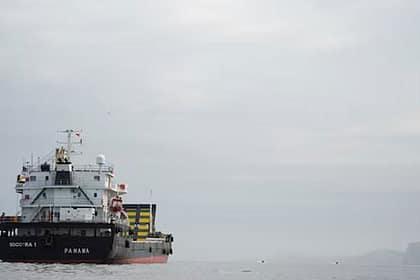
The Middle East war exposed the second weakness: imported energy. Pakistan’s oil supplies remain tied to a volatile region and to risks around the Strait of Hormuz. The rise in international oil prices during March and April increased pressure on the import bill, production costs and domestic prices. Inflation rose from 5.6% in December 2025 to 7.3% in March 2026, and then to 10.9% in April. The State Bank raised the policy rate to 11.5% to contain inflation expectations. Petroleum imports rose to $8.9 billion during July to March, while transport accounted for the bulk of petroleum consumption.
The government’s response avoided broad untargeted subsidies. That was economically sensible. It also confirmed how little fiscal room Pakistan has when oil prices rise. A general fuel subsidy would have damaged the budget, weakened the IMF programme and helped richer consumers more than the poor. Targeted relief through BISP and similar channels is the better route. Yet targeted relief must become faster, better indexed and linked to shock data. Floods and energy shocks hurt households before government files move.
Social protection has expanded, but household stress remains visible. Pro-poor expenditures reached Rs4.66 trillion during July to March, and BISP remained the flagship programme. Poverty, however, rose to 28.9% in 2024 to 2025, while inequality also increased. Cash transfers protect minimum consumption. They do not replace lost livestock, damaged tools, unpaid school fees, health costs, debt repayments or destroyed homes. A modern social protection system must respond to climate and price shocks automatically, not only through ad hoc announcements.
Climate reforms under the IMF Resilience and Sustainability Facility provide a useful opening. Pakistan has moved on a supplementary carbon levy on petroleum products, electric vehicle policy, SBP climate risk guidelines, green taxonomy and ESG disclosure guidelines. Ongoing reforms include climate weighting in PSDP project selection, disaster risk financing, climate budget tagging and targeted energy subsidy reform. These reforms should not remain compliance milestones and the commitments under IMF’s EFF should not spoil the commitments under IMF’s RSF.
Today’s budget should keep stabilisation but widen its purpose. It should protect the primary surplus, broaden the tax base, reduce energy import exposure, fund water security and make social protection shock-responsive. It should also protect development spending from the old habit of spreading money thinly across too many projects. Pakistan does not need more announcements. It needs fewer, better-financed projects that reduce future liabilities.
The Economic Survey shows that discipline can lower the deficit, stabilise the rupee and revive output. However, it als also shows that one flood, one oil shock, one disruption in Gulf labour markets or one tightening in global finance can still unsettle the arithmetic. Pakistan has bought macroeconomic time. The coming budget should be judged by whether it uses that time to build thicker protection for the economy and for citizens who keep paying for shocks they did not create.
The writer heads SDPI, chairs the board of the National Disaster Risk Management Fund, and serves on the ADBI’s Advisory Board. He posts on LinkedIn @Abidsuleri
Disclaimer: The viewpoints expressed in this piece are the writer’s own and don’t necessarily reflect Geo.tv’s editorial policy.
Originally published in The News
2026-06-12 09:17:00